
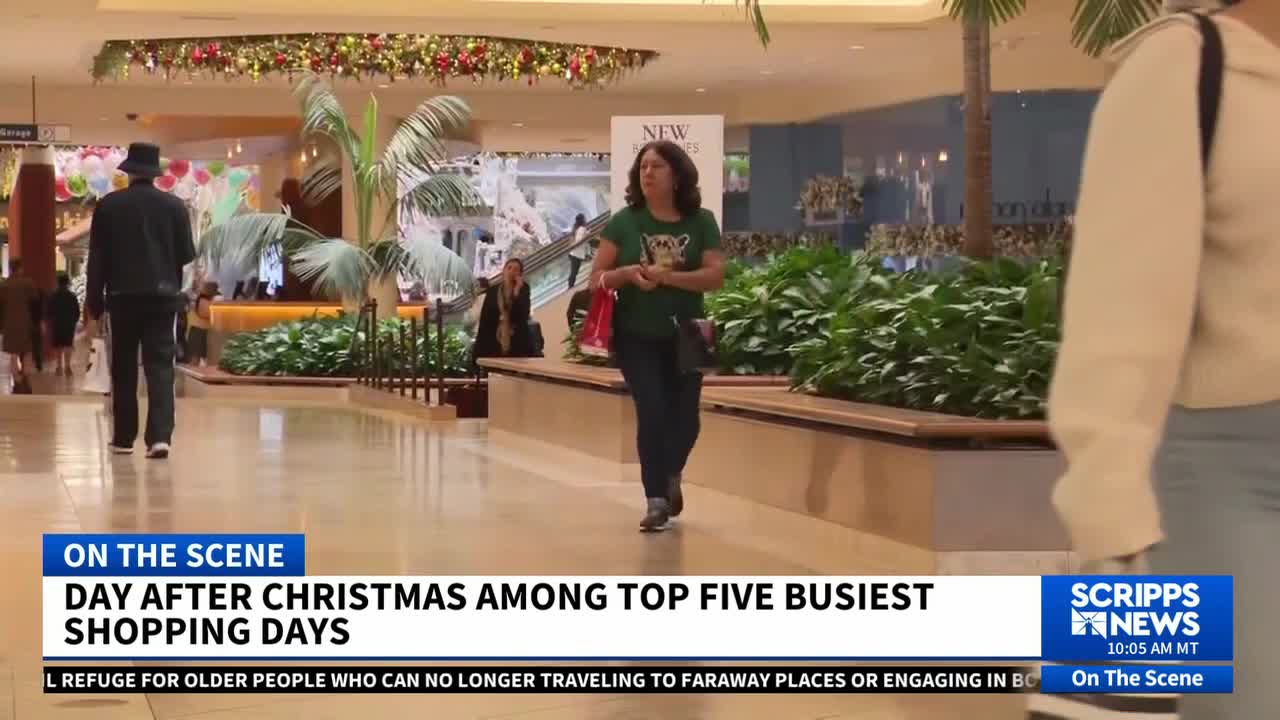


The holiday shopping rush isn't over just yet: the day after Christmas is expected to rank among the top five busiest shopping days of the year, according to SensorMatic Solutions, which tracks shopping patterns.
Returns, exchanges and gift card spending are driving the surge, where brick-and-mortar retailers, in particular, are seeing a notable post-holiday bump as shoppers take back unwanted gifts and take advantage of clearance sales.
RELATED STORY | The one mistake that turns your Christmas gift card into worthless plastic
Even before final tallies are released in January, early indicators suggest Americans spent more than expected this holiday season, despite lingering concerns about inflation, tariffs and the broader uncertainty about the economy.
Data from major retailers and payment processors show that shoppers weren't just paying higher prices; they were buying more items overall. Mastercard and Adobe Analytics, which track online shopping behavior, both found growth in the number of transactions, suggesting consumers stayed active even as costs remained elevated.
That strength came despite fears heading into the season that tariffs and higher prices could dampen demand. Instead, retailers leaned heavily on promotions, early sales and discounts, helping keep shoppers engaged through December.
RELATED STORY | Want to avoid post-holiday return headaches? Follow these steps
One of the clearest trends this season is the continued rise of "buy now, pay later" services.
According to Experian, 43% of consumers surveyed said they planned to utilize BNPL services to finance their holiday shopping. That number is up 20% since a similar survey was conducted in 2023. Financial experts warn that while BNPL can offer short-term flexibility, it may also obscure how much debt consumers are taking on, particularly for middle-income families.
While overall spending remained strong, economists say the gains were far from evenly distributed. Higher-income households accounted for a disproportionate share of holiday spending, particularly in luxury categories. Meanwhile, middle- and lower-income consumers increasingly traded down to budget brands. That divergence underscores what many analysts describe as a "two-track economy," where affluent consumers remain insulated from higher prices while others rely more heavily on credit and payment plans.
