



OMAHA, Neb. (KMTV) — The world knew it as the Juvenile Diabetes Research Foundation, or JDRF, for more than 50 years. However, in 2024, the name changed to Breakthrough T1D to reflect, in part, how many people are diagnosed with type 1 as adults.
- "My main purpose in screening was being able to take a picture with (my daughter) Mary Kate and put it on social media - put it on Facebook, put it on LinkedIn and promote how important screening is for people of all ages," Chris Dunn said.
- She screened at home in March 2025. A few weeks later, she learned she tested positive for multiple antibodies which proved was in Stage 2 - with no obvious symptoms.
- Dunn qualified for Tzield, and received treatment in Denver. The therapy is FDA-approved to delay progression. "I'm hoping for the best case scenario where I get a really long delay to when we have cures therapies available for people in Stage 3 and Stage 4 T1D. But any delay that I get is a win in my book."
Continue reading for the broadcast transcript of this story.
Of Chris Dunn's joyful four, two were diagnosed young with type 1 diabetes, so the others regularly screen - as Dunn did, herself, in March.
"My main purpose in screening was being able to take a picture with Mary Kate and put it on social media - put it on Facebook, put it on LinkedIn and promote how important screening is for people of all ages," she said.
Dunn is more than a T1D mom. She leads Nebraska's Breakthrough T1D chapter.
Statistics supported by the national organization show roughly 62% of all type 1 diagnoses today are adults.
For Dunn, that social media exercise turned 'surreal.'
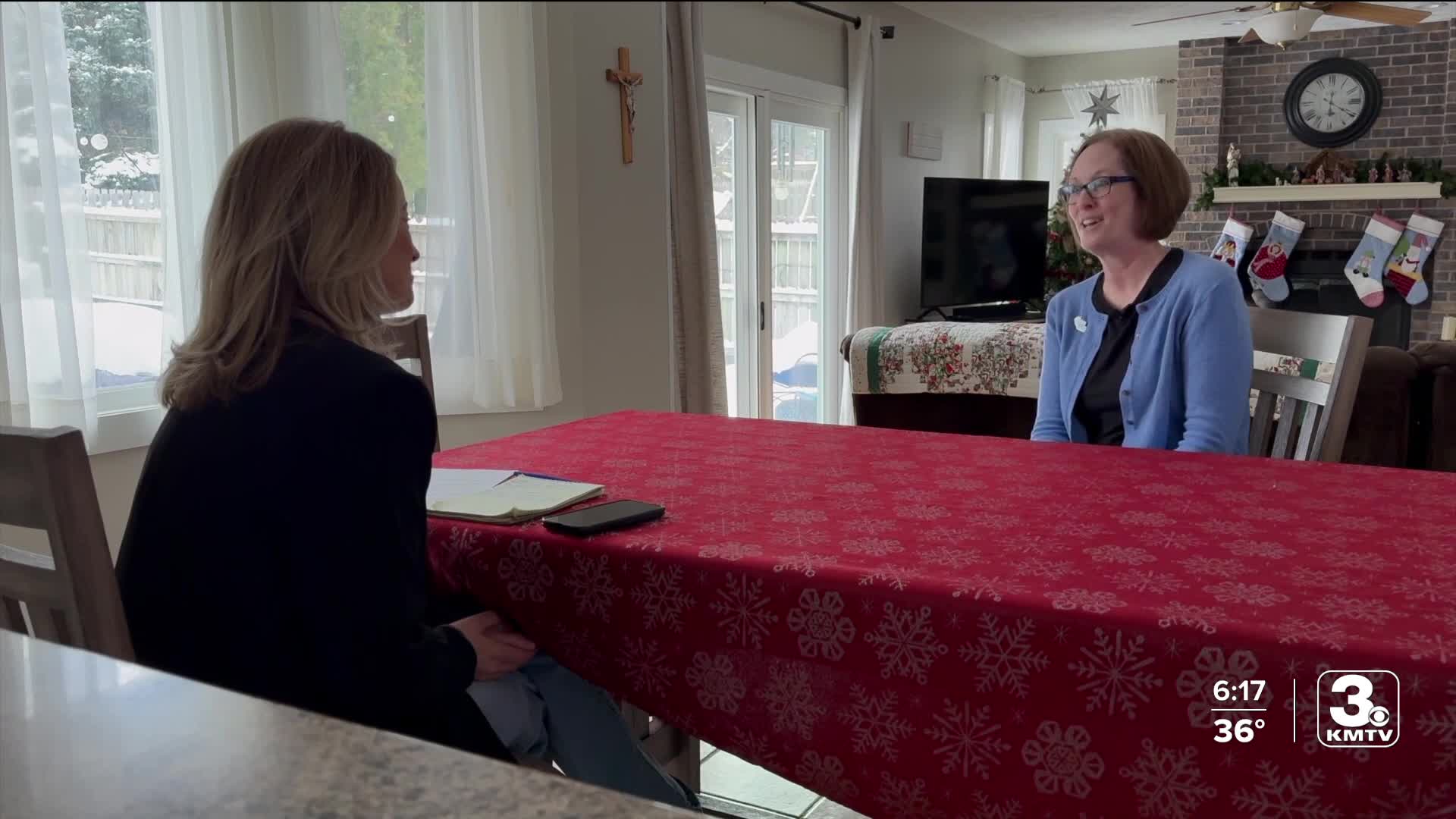
"I have a standing desk at work. I had to pull the chair over and sit down. And just try to comprehend the fact of what I had just been told," she recalled.
With no obvious symptoms, antibody testing showed she was in Stage 2 and not yet requiring insulin.
"In thinking about Chris Dunn's story, as a pediatric endocrinologist, there's a few things that really strike me. One is that, when I have the conversation about screening first degree relatives, parents are usually so eager to get their children screened yet they don't think about screening themselves as adults," Brynn Marks, MD, MSHPEd, explained.
Dunn had screened once before - in 2011. She was negative then.
"So, I had to have the genetic predisposition for this disease. And then, at some point in time, I was exposed to some sort of trigger that caused my immune system to kick on and misfire," she elaborated.
Understanding causes is one focus for researchers. Therapy is another.
When $450,000 is raised at a walk in Ashland, or when $1.7 million is raised at a gala in downtown Omaha, the money helps fund research - the kind which brought about Tzield. It's a disease-modifying therapy to which Dunn has responded well.
"Of course, I'm hoping for the best case scenario where I get a really long delay to when we have cures therapies available for people in Stage 3 and Stage 4 T1D. But any delay that I get is a win in my book."
Some insurance plans cover T1D screening, as do certain trials. Dunn went through this website, which is free. She advocates for its use for people of all ages.
Download our apps today for all of our latest coverage.
Get the latest news and weather delivered straight to your inbox.
