



Summer in Nebraska and Iowa means time spent outdoors, and for many, that includes a day at the lake. But the season also brings another presence to local waterways: algae.
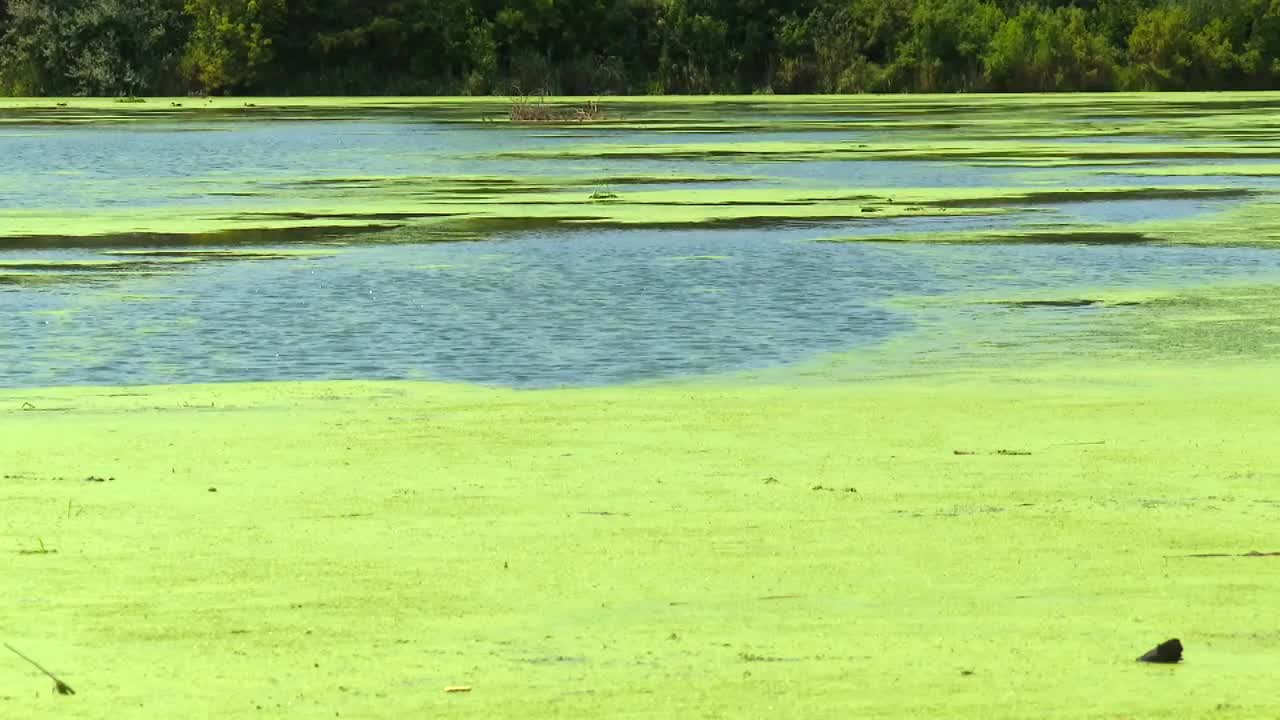
At Standing Bear Lake, weather conditions over the past few weeks have allowed algae to bloom. Here is what you need to know before you, or your pets, get in the water.
Algae thrives in summer for three reasons. Warmer temperatures allow for faster reproduction, abundant sunlight enables photosynthesis, and rainfall carries nutrients like phosphorus and nitrogen into waterways, giving algae the fuel it needs to flourish.
While most algae is healthy for the environment, an excess of nutrients can cause it to grow too quickly and release harmful toxins. This is known as a harmful algal bloom, or HAB, and can put people and pets at risk, according to Nebraska DHHS.
Cities and state organizations, including the Nebraska Department of Water, Energy, and Environment, monitor local lakes for HABs. But there are also signs you can look for yourself: Algae that takes on a blue-green hue or other unusual color, emits a foul odor, or creates a foamy or paint-like surface on the water could be harmful.
University of Nebraska-Lincoln algae expert Jessica Corman offered this guidance: if you encounter what you believe to be harmful algae, do not swim, drink, or boat through it. If you or your pets do come into contact with a HAB, rinse off immediately with fresh water.
This story was reported on-air by a journalist and has been converted to this platform with the assistance of AI. Our editorial team verifies all reporting on all platforms for fairness and accuracy.
