



Last weekend, during our extreme heat wave, Omaha reached a high of 104 on Saturday. Meanwhile, rural communities reached the mid-to-upper 90s. How was Omaha 5-10 degrees warmer than the surrounding neighborhoods?
While you probably know the reason, such as concrete, buildings, lack of trees, etc. But did you know it has a name? The Urban Heat Island Effect.
However, the heat island effect is not universal, and heat varies from neighborhood to neighborhood.
In August 2022, Jesse Bell, Executive Director of the Water, Climate, and Health program at UNMC, led a study about Omaha's heat risk.
"We had over thirty volunteers. We had instrumentation that was put onto their cars...and then they drove specific routes throughout the city three times during the day. One in the morning, one at midday, and one later in the afternoon," Bell said.
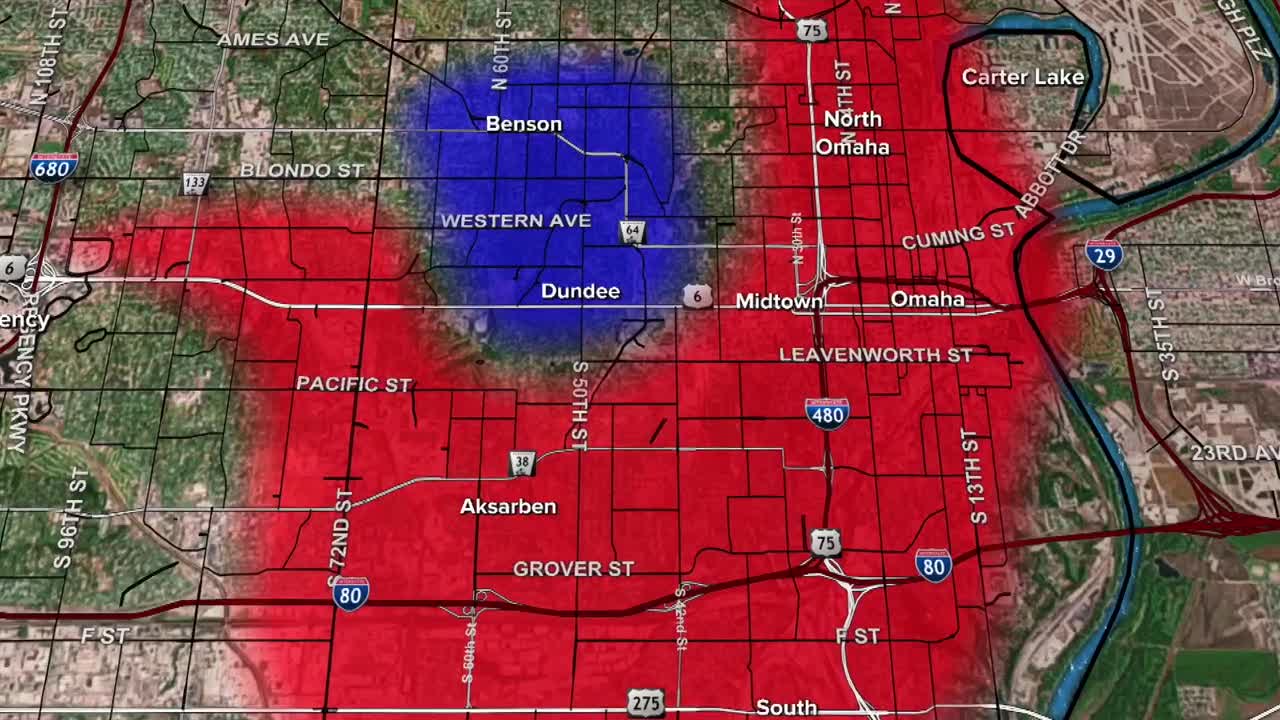
The results were interesting. In neighborhoods with lots of concrete and few trees, temperatures can run as much as 10 degrees hotter than in neighborhoods with better tree shade.
His study found that some of the hotter neighborhoods included downtown, parts of North & South Omaha, the industrial area between I-80 and L, Aksarben Village, and 72nd Street to 90th and Dodge.
By contrast, some of the cooler spots included the Westside area, Dundee, Memorial Park, and Benson.
The temperature differences are apparent in lots of ways, from higher energy bills to expanded health issues, according to Bell.
Bell says that the data has been sent to city offices and to Keep Omaha Beautiful to begin processes to cool down some of the hotter parts of town.
