

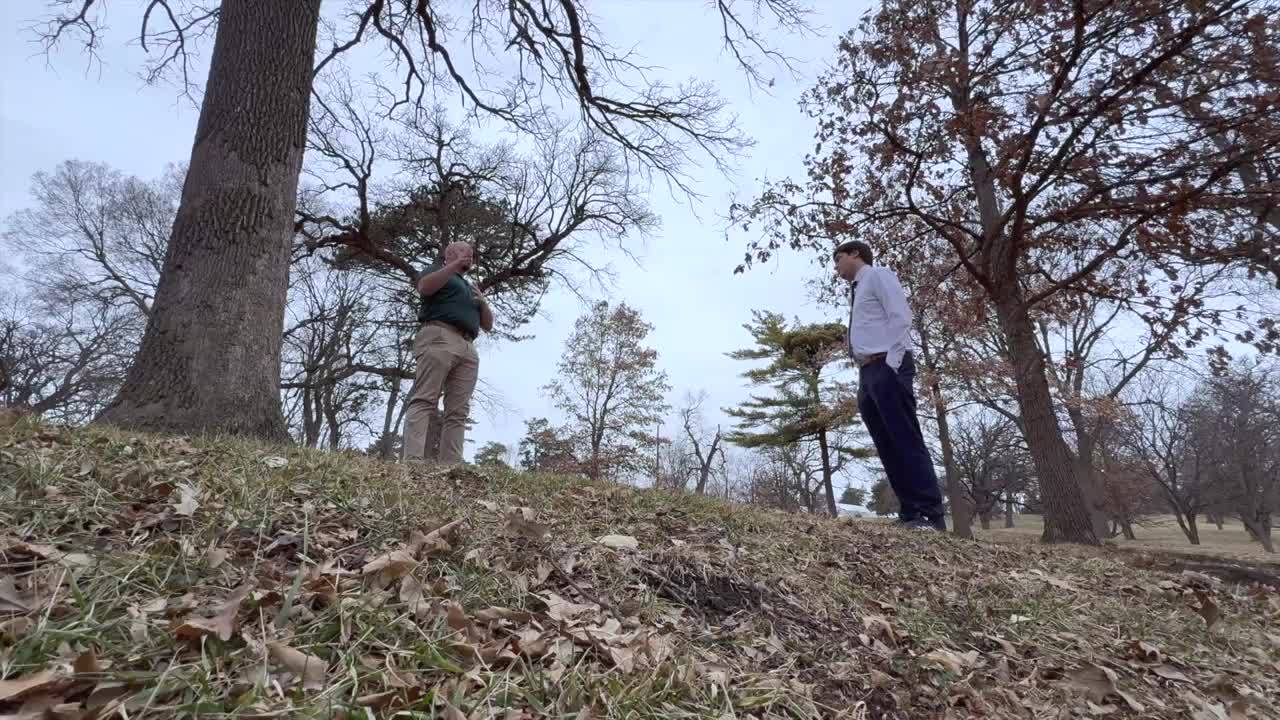


It’s Winter, and that means most of your yard work won’t be needed for the next few months. But there is something you can do right now: tree pruning.
Removing dead or damaged branches in the winter is recommended by arborists.
Dormant trees, with the leaves and pests gone for the season, are easier to examine so you can see what needs to be cut and where.
Pruning has lots of benefits for trees, such as improving the long-term health and structure of the tree, as well as lowering the risk of damage in severe weather.
“Especially once they get leaves, when it leafs out in springtime, and you get these big springtime storms, those act like sails, and so if the branch is the mast of your sailboat and the leaves are the sail, if your mast isn’t strong enough, it’s gonna break,” says Dillon Seelee of Davey Tree Omaha.
When pruning, arborists recommend the three-cut method:
1. Cut a short distance from the trunk on the bottom of the branch, about 1/4th through. This helps to prevent bark tear
2. Cut farther out to reduce the weight of the branch, only a short segment should remain.
3. Cut just outside the branch collar. “Every branch coming out, either a bigger branch or coming out of the trunk, is going to have a little area that’s a little bit sloped. That’s called the collar. So you want to go just outside that collar and then cut it perpendicular to the tree’s growth,” Seelee says.
It’s recommended to prune when the trees are dry, meaning no snow or ice on them. Temperatures do not play a big factor into when you need to get it done.
Pruning can be dangerous if you do not have the right tools, safety equipment, or if branches are close to trees or power lines. If you feel unsure about pruning trees yourself, contact an arborist, and they can come out and assess the situation.
