

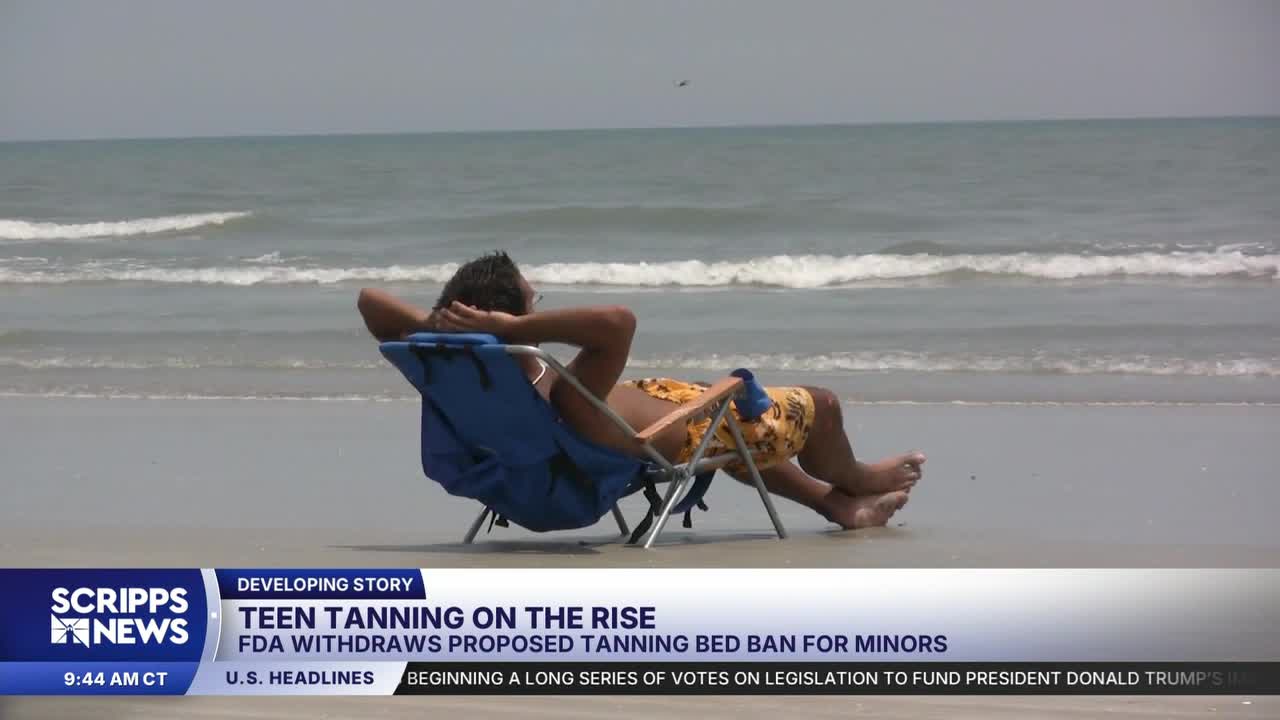


Teen interest in tanning beds appears to be making a comeback, worrying dermatologists who warn that the practice significantly increases the risk of skin cancer later in life.
Dr. Susan Massick, a dermatologist at The Ohio State University Wexner Medical Center, said the trend may be driven by the persistent belief among some young people that a tan looks healthy or attractive.
"From our perspective, tanning beds, any type of tan is actually not healthy at all," Massick said.
Research has consistently linked indoor tanning to higher rates of skin cancer. Massick said tanning beds can increase the risk of squamous cell carcinoma and melanoma by roughly 40% to 50%.
IN CASE YOU MISSED IT | People who tan at a gym are more likely to become addicted to it
"You may be using your tanning beds in your teen years, but you'll unfortunately have the impact in 20 to 30 years, when you end up with increased pigmentation, aging of the skin, premature aging of the skin, wrinkles, and unfortunately also skin cancers," Massick said.
Misinformation online could also be sparking interest in tanning. Some social media posts have questioned the safety of sunscreen, despite decades of evidence showing it helps prevent skin cancer.
Massick said concerns about sunscreen causing cancer stemmed from a small study involving about 20 participants that examined whether sunscreen ingredients could be absorbed into the bloodstream.
IN CASE YOU MISSED IT | FDA puts warning labels, tighter rules on tanning beds
"In fact, sunscreens prevent skin cancer. So in terms of whether there's an increased risk of actual cancer related to the sunscreen, that's been actually debunked," Massick said. "So there is no increased risk of other types of cancers
Massick said sunscreen should be part of a daily routine year-round, not just during summer months.
She recommends using a broad-spectrum sunscreen with an SPF of at least 25 to 30 every day. For extended outdoor activities such as swimming, sports or trips to the beach, she advises using a water-resistant sunscreen with an SPF of 50 or higher.
