



A new mRNA flu vaccine may offer a better way to fight influenza this season, and it is already making its way to pharmacies.
The Food and Drug Administration cleared Mfluziva, an mRNA flu vaccine produced by Moderna, for use in people 50 and older in August. A late-stage clinical trial published in the New England Journal of Medicine found it to be 27% more effective than a standard flu shot.
Mfluziva works similarly to the mRNA COVID-19 vaccines. It delivers instructions that tell cells to produce a harmless flu protein, which alerts the immune system to recognize and fight the virus.
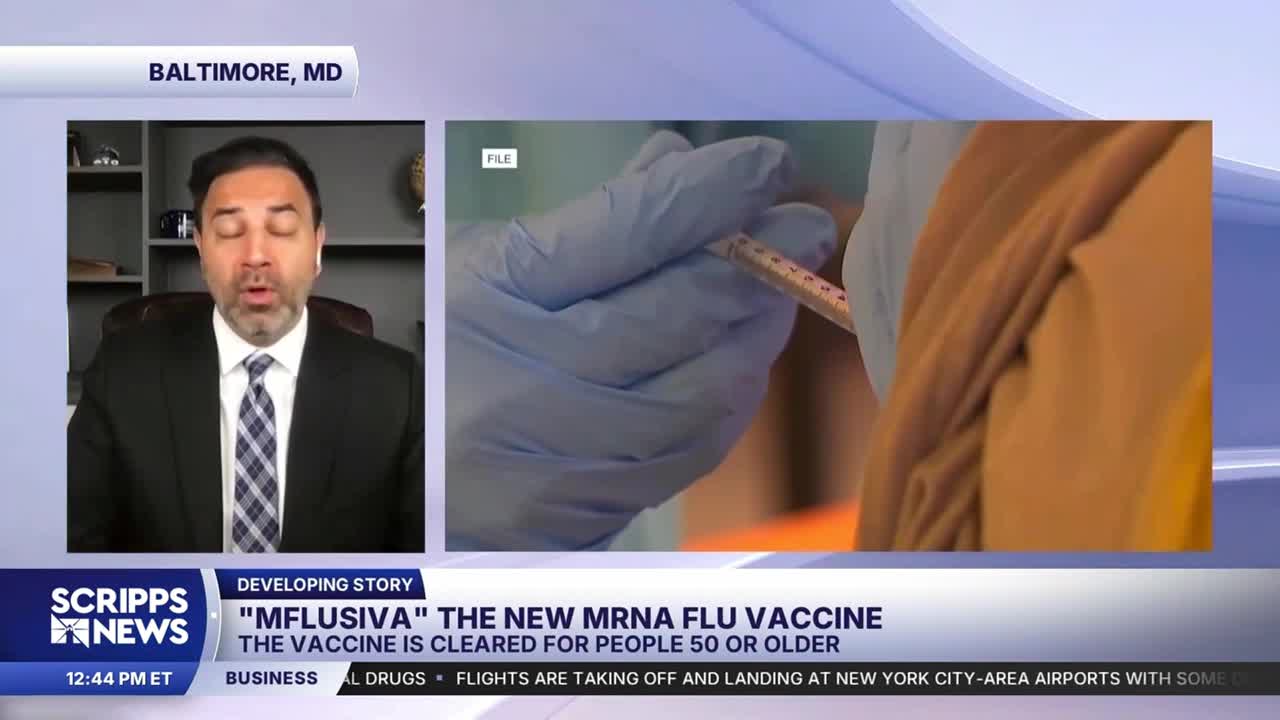
"The Mfluziva vaccine is an mRNA vaccine, it uses the same technology as the COVID-19 vaccines that we're used to during the COVID-19 pandemic," Scripps News medical contributor Dr. Omer Awan said.
RELATED STORY | Medical groups release 2026-2027 flu, COVID and RSV vaccine recommendations for fall season
One key advantage of mRNA technology is speed. Traditional flu vaccines are grown in eggs or cell cultures, a process that takes six to eight months. Because mRNA vaccines rely only on a virus's genetic sequencing, they can be manufactured in roughly two to three months.
The vaccine is currently approved only for people 50 and older because that is the age group studied in the phase three clinical trial. It has not been tested in younger adults or children, and FDA approval requires data from each specific age group before expanding use.
It is also worth noting that the CDC does not preferentially recommend Mfluziva over all other options. For people 65 and older, the CDC still preferentially recommends high-dose, recombinant, or adjuvanted flu vaccines.
"It just means that there's a lot of different options for different age groups," Awan said.
As for side effects, they are generally similar to those of a traditional flu shot — low-grade fever, headache, and injection site pain. Trial data showed side effects were mild to moderate and typically lasted two to three days. People who received the mRNA vaccine did experience slightly more prominent side effects than those who received a standard dose vaccine, though no significant safety concerns were identified.
RELATED STORY | Mandatory flu shots for all military recruits as outbreak sickens nearly 300
"Based on the research that we have, the mRNA flu vaccine is safe," Awan said. "It's certainly effective and it can be used for those that are, again, only 50 years of age and older."
Beyond flu, mRNA technology is also being explored for cancer treatment, including in melanoma patients whose cancer has spread to other parts of the body.
