


IOWA (KMTV) — Iowa Department of Natural Resources has outlined changes for the 2026-2027 hunting seasons.
- Deer licenses go on sale this year starting at 9 a.m. on August 15.
- Iowa now has two zones for resident deer hunting: Zone A and Zone B. Hunters must declare their zone(s) at the time of purchasing a license, and it is possible to get more than one — and combine zones.
According to the Iowa DNR: "ZONE A counties in yellow continue the Antlered-buck only restriction during first regular gun season, EXCEPT for Landowner-Tenant. The remaining ZONE A regulations are unchanged."
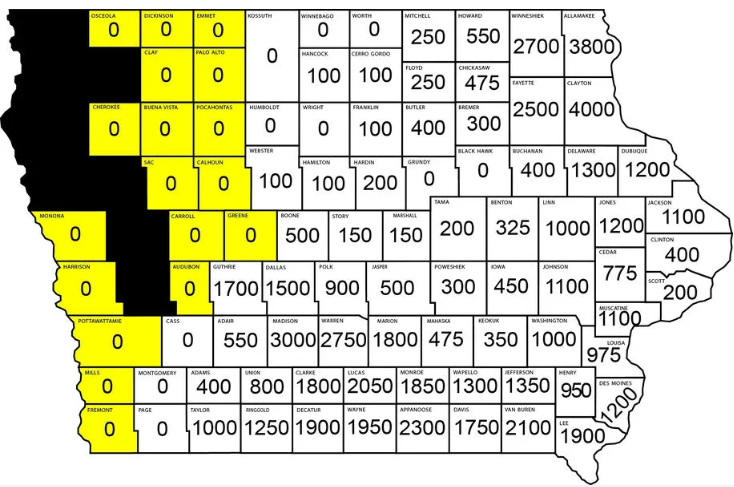
- And then, according to Iowa DNR: "ZONE B allows hunting for Antlered-buck only (at least one forked antler) in all seasons EXCEPT Youth, Disabled, Landowner-Tenant and Depredation. PARTY HUNTING is NOT allowed in ZONE B for residents and nonresidents- ZONE B requires each hunter to tag their own deer."
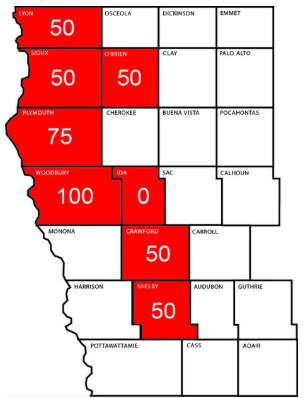
Additional details about the upcoming hunting seasons are available here.
According to the National Deer Association, Iowa's deer population peaked in 2006 with around 650,000 pre-hunt animals. Today, their estimate sits between 445,000 to 500,000.
Iowa DNR representatives are emphatic in pushing back against these numbers — saying, they don't consider them to be accurate.
"Our deer program intentionally avoids providing statewide deer population counts, as producing a reliable estimate is beyond what our current data can support. Instead, we monitor deer population trends... using a variety of independent datasets, including reported deer-vehicle collisions, spotlight survey counts, bowhunter observation survey counts, and reported harvest," State Deer Biologist Jace Elliott wrote to KMTV.
"None of these datasets is sufficient for estimating population size alone, though they offer valuable insight into how deer numbers are changing over time and provide the biological basis for much of our management decisions," Elliott added.
In terms of numbers, and specifically related to the total deer population in ZONE B, Elliott said the agency believes numbers have declined by approximately 50% over the last 10-15 years. The rest of Iowa, he said, has not experienced "such severe declines and has remained relatively stable during this time period."
The changes outlined above will remain in effect, state officials say, until population numbers rebound.
A note from KMTV: The text of this online article, as well as the original social media headline, have been modified to more accurately represent the factors and methodology for researchers and decision-makers in Iowa.
Download our apps today for all of our latest coverage.
Get the latest news and weather delivered straight to your inbox.
