



The year 1953 may be just one of 250 years in American history, but for Omaha, it stands out as one of the most consequential.
In a single year, the city gave the country innovations and cultural touchstones that Americans still reach for today, from the freezer aisle to the radio dial.
In 1953, newly elected President Dwight D. Eisenhower took office, the Korean War was ending, and Joe McCarthy reached the height of his power. Americans tuned into new episodes of I Love Lucy (at least those who had a television), went to the theater to watch From Here to Eternity, or listened to Dean Martin on the radio.
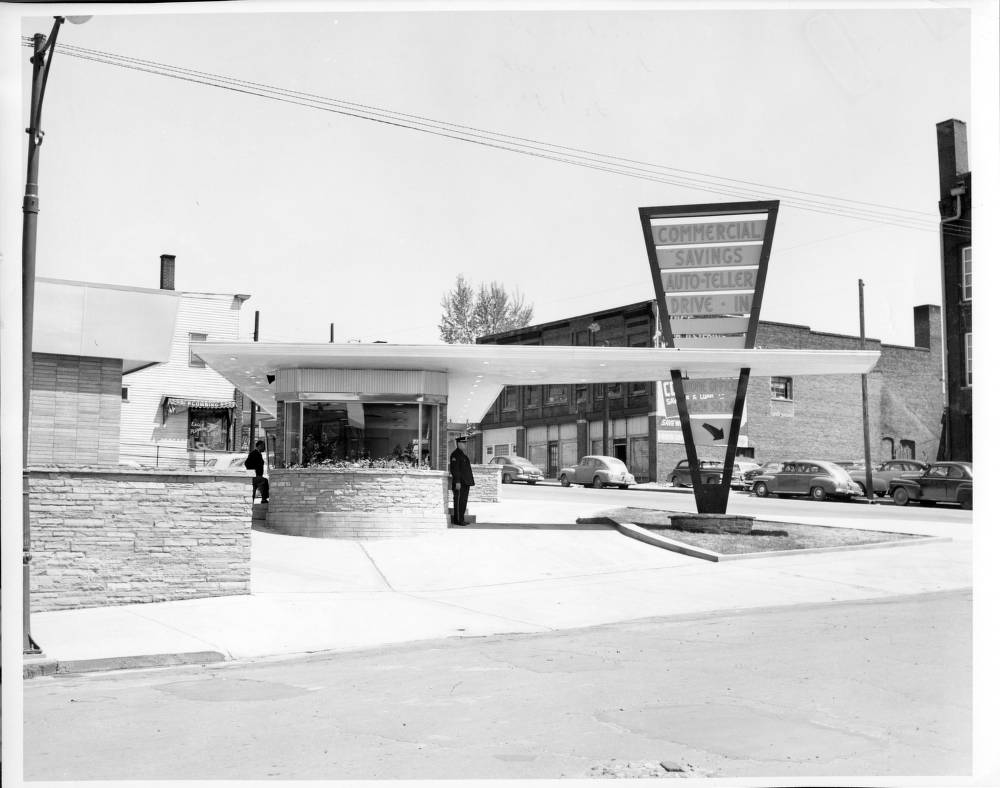
Omaha's population in 1953 was just over 300,000. Mayor Glenn Cunningham was serving his 5th year in office. New buildings like the first drive-thru banking facility at Commerical Federal Bank, Countryside Village, or Christ the King Catholic School were opened. The stockyards reached their peak. And Omaha achieved cultural success.
Let's start with dinner.
The TV Dinner was the idea of the Swanson brothers, and they had an issue. Thanksgiving 1962 had lots of surplus turkey's, which needed to be refrigerated. The story goes that the brothers, alongside Gerry Thomas, were inspired by the segmented trays used to serve airline food to serve meals. They created an aluminum tin with a section for turkey, potatoes, and vegetables. These would be frozen, packaged, and heated up in ovens. The trays were small enough to fit in front of a TV, an innovation that was becoming popular in the United States at the time.
Now, from poor college students to busy workers needing a quick meal, the TV dinner has become a staple in American freezers.
Now that dinner is served, what movie should we watch?
How about 1953's The Wild One, starring Marlon Brando. Brando, who was well on his way to becoming one of the most influential actors of the 20th century, was born in Omaha in 1924. Though he moved to Illinois when he was six, Brando wrote in his 1994 autobiography that Omaha was only one of two places where he felt happy (the other was a South Pacific island that he owned).
Brando entered the movie scene in 1951 with the breakout hit A Streetcar Named Desire. He starred in two movies in 1953: Julius Caesar, where he played Marc Antony; and The Wild One, where he played motorcycle gang leader Johnny Strabler. His look and portrayal of the character became an iconic image of the 1950s. This rebellious image would spark off the look of the counterculture, found in figures like James Dean & Elvis Presley.
Once the movie is over, what's for dessert?
How about cake? Duncan Hines was not from Omaha, but from Bowling Green, Kentucky. After making his name being a restaurant critic, he delved into the world of baked goods. In the late 1940s, Hines teamed up with Roy Park to create Hines-Park Foods. One of their products was the boxed cake mix (invented in the 1930s, but popularized by the brand), developed by food scientist Arlee Andre. Andre worked for Nebraska Consolidated Mills (now known as ConAgra), and put his name on the cake mix.
Now, Duncan Hines Cake Mix is one of the most popular cake mixes on store shelves.
Omaha's 1953 legacy also spans to your commute. Anytime you listen to a Top 40 Radio station, you are listening to another Omaha innovation.
Dave Wingert has been part of Omaha's radio scene off and on since the 1970s. Each time he has left, he has returned. He has since been inducted into the Nebraska Broadcasters Association Hall of Fame.
"Omaha has been very good to me...and I'm part of the fabric of Omaha. It moves me that I made a contribution that matters," Wingert said.
Wingert traces the origins of Top 40 radio to Omaha native Todd Storz.
"As rumor would have it, as the story goes, he sat in a diner somewhere, and people were playing the same songs on the jukebox, and he went hmmm, and that's how top 40 radio was born," Wingert told us.
Today, Top 40 is heard across the dial, a format born from an Omaha idea that unified listeners across generations and backgrounds.
"Music unites people...oh you like that song? I like that song too. It unifies people...we find that commonality, and we do that over songs," Wingert said.
From the freezer to the movie theater, the kitchen to the car radio, 1953 was a year when Omaha quietly shaped the way America lived, and the echoes have never faded.
Download our apps today for all of our latest coverage.
Get the latest news and weather delivered straight to your inbox.
