


OMAHA, Neb. (KMTV) – Doctors at the University of Nebraska Medical Center say up to 19 American passengers could be transported to the National Quarantine Unit on campus.
- The National Quarantine Unit at UNMC is the only federally funded quarantine unit in the United States, and the Nebraska Biocontainment Unit on the same campus is on standby in case any passenger becomes sick.
- Doctors expect 17 passengers but the number could be as high as 19, with no defined quarantine period established — it could be days or weeks.
- Unlike COVID-19, the andes hantavirus confirmed in this case has not caused sustained human-to-human transmission, according to Nebraska Biocontainment Unit Medical Director Angela Hewlett.
BROADCAST TRANSCRIPT:
American passengers from a cruise ship linked to a hantavirus exposure are expected to arrive at Offutt Air Force Base before being transported to the University of Nebraska Medical Center for quarantine, according to the CDC.
The passengers will first arrive at the Canary Islands on Sunday, where they will be evaluated before being flown to Offutt on a government flight. From there, they will be transported to UNMC, where doctors expect to monitor between 17 and 19 passengers at the National Quarantine Unit.
Doctors could not confirm an exact arrival day or time. There is no defined quarantine period at this time — it could be days or weeks.
The National Quarantine Unit is the only federally funded quarantine unit in the United States and is used to safely monitor people who may have been exposed to high-consequence infectious diseases.
Michael Wadman, medical director of the National Quarantine Unit, said behavioral health resources will be available to passengers during their stay.
"We do have behavioral health specialists who can be available to them in terms of running those small groups to better manage being in that environment for an extended period of time. Which does who know can reduce some stress, and a change in their environment and adjusting to that is difficult so we can't to make sure we do everything we can to smooth that process," Wadman said.
Experts at UNMC have been working closely with federal, state, and local partners to prepare for the passengers' arrival. Local doctors said their experience with Ebola and COVID-19 prepared them for this situation.
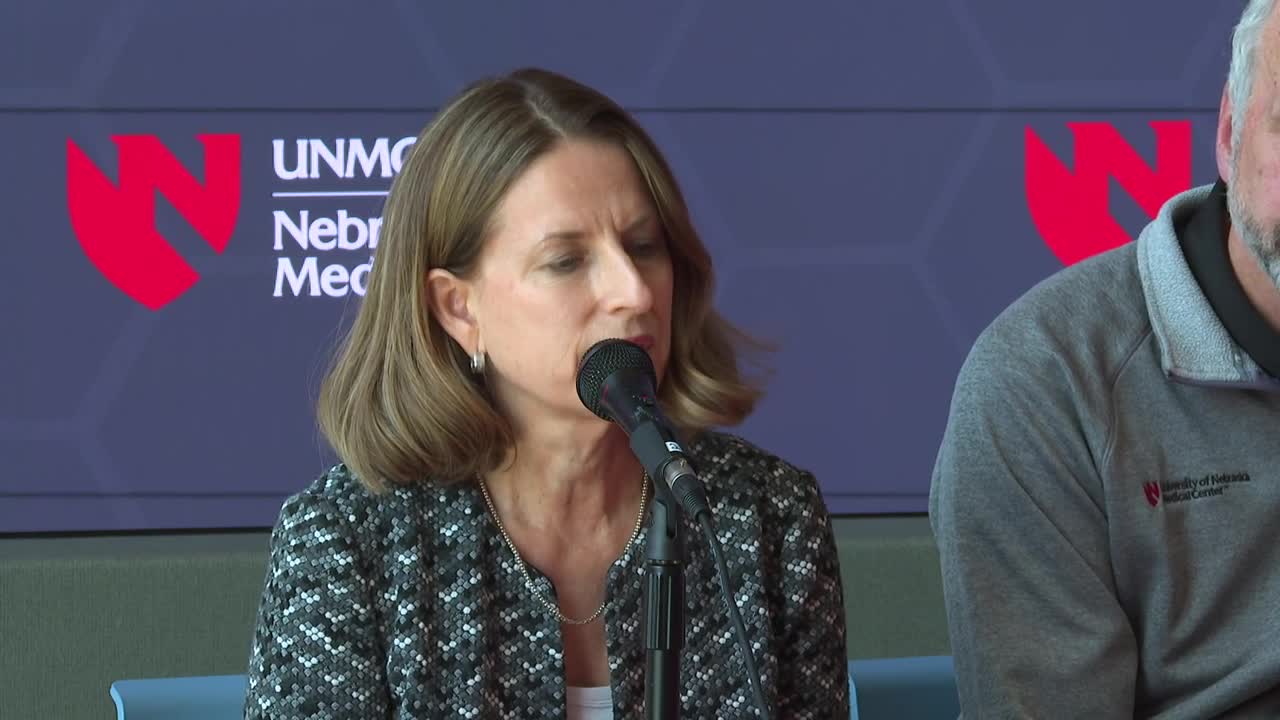
However, doctors noted that hantavirus and COVID-19 are very different. Angela Hewlett, medical director of the Nebraska Biocontainment Unit, explained that the virus involved does not spread the same way COVID-19 does.
"As opposed to what we saw with COVID-19 people could be in not necessarily very close contact and become infected because of the potential droplet and air borne spread," Hewlett said. "hantavirus are very different that even the virus, the Andes virus that this is confirmed to be, has not caused sustained human to human transmission, this not a new virus, this is a virus that has been around for awhile."
All passengers are currently well and have not been diagnosed with hantavirus, according to UNMC.
The Nebraska Biocontainment Unit, also located on the UNMC campus, is currently on standby. If any passenger under quarantine becomes sick, they will be moved to that unit.
