


LINCOLN — LINCOLN, Neb. (KMTV)– A proposed reduction to the Aged and Disabled Waiver is causing anxiety among families who care for disabled relatives at home, with some worried the changes could compromise their loved ones' health.
- Nebraska proposes cuts to family caregiver compensation program, reducing reimbursed care hours from 112 to 40 per week.
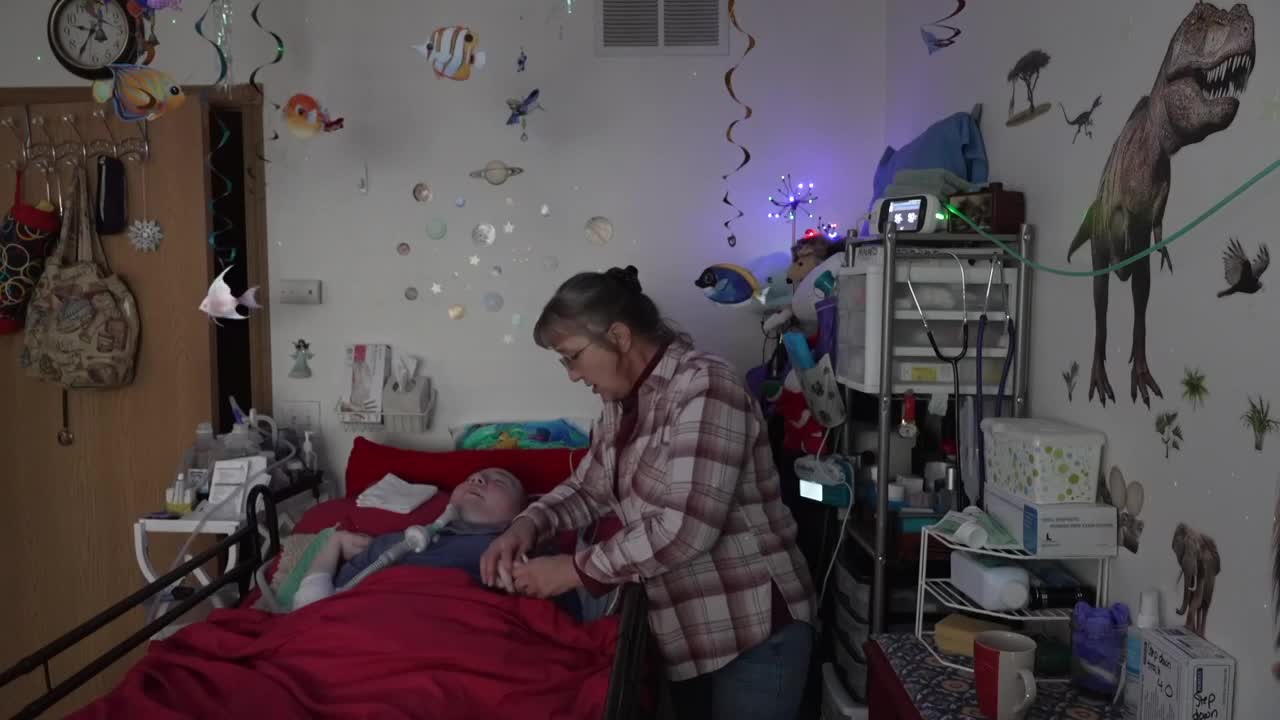
- Lincoln mother Teresa Stewart fears changes will jeopardize health of her disabled son Austin, who requires 24-hour ventilator care
- State says costs increased 322% since 2017, making changes necessary for program sustainability despite family concerns
BROADCAST TRANSCRIPT:
A proposed reduction to Nebraska's Aged and Disabled Waiver is causing anxiety among families who care for disabled relatives at home, with some worried the changes could compromise their loved ones' health and well-being.
Teresa Stewart has spent the last 29 years caring for her son Austin, who became mentally and physically disabled after contracting meningitis when he was less than a month old. A brain hemorrhage left Austin quadriplegic and dependent on a ventilator, requiring 24-hour care.
"Austin needs help with every single care," Stewart said.
For the past nine years, Stewart has stayed home full-time to care for Austin through a state program that compensates families for keeping disabled relatives out of institutional facilities.
"He hasn't had but one hospitalization for a respiratory illness in the past nine years, that's continuity care, that's good care," Stewart said.
Under the current system, Stewart receives reimbursement for 112 hours of care. The proposed changes would reduce that to 40 hours, with an additional 30 hours available only if delivered by someone from outside the home.
"Bringing in outside people that don't know how to take care of, and cant medically take care of his needs is going to disrupt his health care, it's going to be detrimental to his health," Stewart said.
The changes would also leave Stewart working unreimbursed hours.
"To place us in this position where we have little to no options is devastating, it's just devastating," Stewart said.
Governor Jim Pillen has publicly expressed support for the proposal. His office directed questions about the changes to the Department of Health and Human Services.
A DHHS spokesperson said the waiver renewal process occurs every five years and noted that costs have increased significantly since restrictions were lifted in 2017.
"Since high utilization limits were removed in 2017, the average per-participant costs under the AD Waiver have increased by 322% between 2017 and 2025," the department said in a statement.
The department said changes are needed to ensure the program remains sustainable. The proposal is still in draft form, and staff will consider public comments when writing the final policy.
For Stewart, the uncertainty provides little comfort.
"It's frightening, and it's frankly inhumane," Stewart said.
This story was reported on-air by a journalist and has been converted to this platform with the assistance of AI. Our editorial team verifies all reporting on all platforms for fairness and accuracy.
