

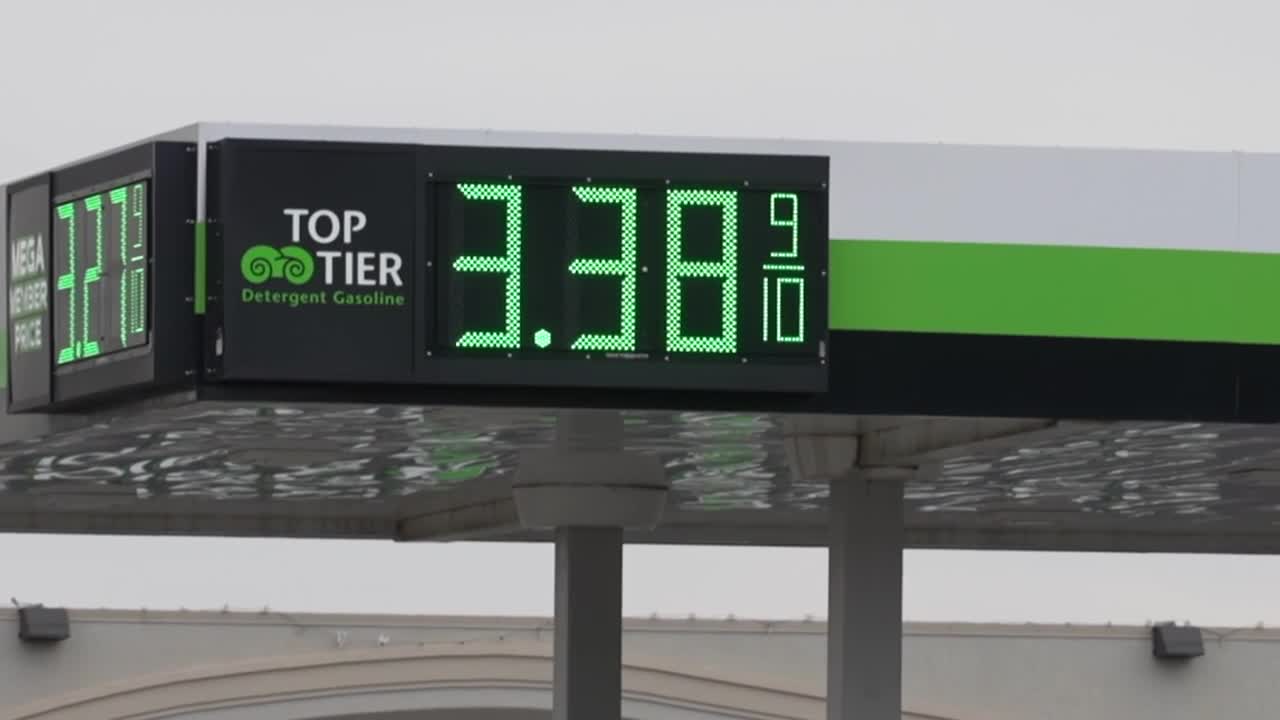


OMAHA, Neb. (KMTV) — The average price for a gallon of gas across the U.S. is now around $4 as the war with Iran continues.
This is a stark difference from what President Donald Trump promised in 2024.
"Energy is going to bring us back. That means we’re going down and getting gasoline below $2 a gallon," Trump said.
In October, the White House celebrated that gas dipped under $3, barring any major disruptions. Since the war began at the end of February, KMTV has been tracking gas prices. One Omaha NP Mart felt the squeeze of paying over 50 cents more in the first two weeks of the conflict.
"People think when the gas prices go up the gas stations are making more money that’s actually the opposite," owner Arshad Nazir said.
Looking ahead, I spoke with Creighton University economics professor Ernie Goss, who tells me Nebraska’s strong agriculture, trucking and manufacturing are in trouble.
"You see a real significant impact here and of course it spills over into the broader Nebraska economy," Goss said.
Across the country, customers are having a hard time affording price hikes.
"I'm a DoorDash deliverer so I need my car to work," Indiana resident Curtis Davis said.
"It's crazy high, and I used to spend like pretty much 35, 40 bucks to fill my tank, the whole car tank, and now it's going about 50, 60," North Carolina resident Brunna Santos said.
On a global scale, the U.S. is in a unique position given the amount of internal oil production, so I asked if that helps out here at the gas station.
"The exports obviously have some real positive impacts on the petroleum industry, unfortunately not for the consumer in the US," Goss said.
That is because the global market is seeing a drastic rise in prices. Since the last week of February, the price of U.S. oil has jumped from $65 to over $100 per barrel. I asked Goss if there is an event in history comparable to what we are seeing today.
"We had the OPEC oil embargo and that pushed up oil prices it slowed the US economy," Goss said.
He says the price controls of the 70s led to other problems like long lines and shortages.
"We don’t need to see a short term solution that produces long term problems and thats unfortunately what happens in energy," Goss said.
Goss says that if the war isn't over soon, these high oil prices will drive up other costs like groceries due to trucking struggles.
This story was reported on-air by a journalist and has been converted to this platform with the assistance of AI. Our editorial team verifies all reporting on all platforms for fairness and accuracy.
