



From the deadly Tree of Life synagogue shooting in Pittsburgh to the vehicle attack at Temple Israel in Michigan, violence targeting Jewish houses of worship has heightened security concerns for congregations across the country.
Many synagogues have responded by hiring private security guards, requesting police protection or implementing additional security measures. But those protections aren't always available or affordable, leaving some congregants looking for ways to protect themselves.
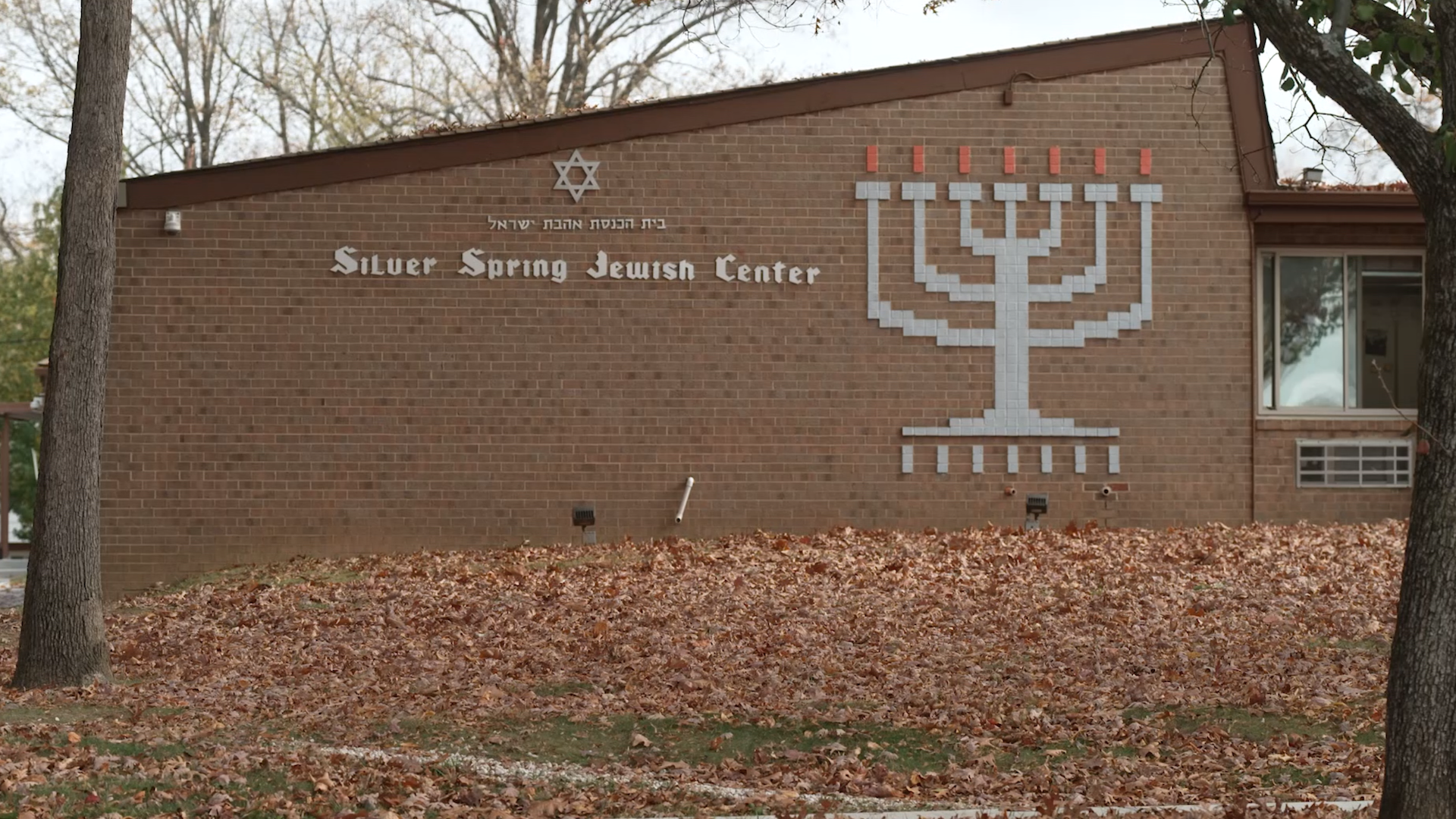
Now, an Orthodox Jewish congregation in Montgomery County, Maryland, is fighting a local gun law that members say prevents them from exercising their constitutional rights and protecting their community.
"You just never know when something's going to happen," said Eric Baxter, an attorney representing the Silver Spring Jewish Center.
The Silver Spring Jewish Center says its security concerns became particularly urgent after a visibly Jewish congregant was assaulted outside the synagogue in October 2024. The congregation subsequently developed a security plan that includes armed volunteer members. But a Montgomery County ordinance prohibits carrying firearms inside or within 100 yards of places of public assembly, including houses of worship.
In September, a federal judge temporarily blocked enforcement of the restriction inside houses of worship, allowing licensed members of the congregation to carry firearms within the synagogue. However, the judge left the 100-yard restriction in place.
That distinction creates a challenge for Orthodox Jews, who observe restrictions against driving on the Sabbath and certain holidays. While congregants can legally carry firearms inside their synagogue, they cannot carry those weapons while walking through the restricted zone to reach it.
RELATED STORY | FBI says man who crashed truck into Michigan synagogue was inspired by Hezbollah
"It's really shameful," Baxter said. "Montgomery County is one of the most religiously diverse counties in the nation, and so we have people of all different faith traditions here. And the county really ought to be accommodating and helping those congregations flourish, regardless of their faith needs."
The synagogue is now asking the U.S. Court of Appeals for the Fourth Circuit to block the remaining restriction.
"It just makes no sense," Baxter said. "To accommodate them while they're in the synagogue, but not on their way to the synagogue is no protection at all. They're responsible gun carriers; they can't leave guns lying around in the synagogue."
The congregation's concerns come amid continued security threats and incidents involving Jewish institutions nationwide. Earlier this month, security personnel at Washington Hebrew Congregation in Washington, D.C., detained a man who attempted to enter the synagogue with a loaded firearm. The man triggered a metal detector, prompting security staff to confiscate his weapon and detain him until police arrived. Authorities charged him with firearms offenses. No one was injured, and officials said the incident did not appear to be an attempted attack. The incident occurred approximately 11 miles from the Silver Spring Jewish Center.
Other incidents have demonstrated the potentially lifesaving role of armed security.
In March, an attacker rammed a vehicle into Temple Israel in West Bloomfield, Michigan, and exchanged gunfire with armed security personnel. The attacker died, and no children or congregants inside were injured.
For smaller congregations, however, maintaining professional security can be expensive.
The Jewish Federations of North America estimates that Jewish communities nationwide spend more than $1 billion annually on security. Federal funding is available through the Nonprofit Security Grant Program, but demand for those grants exceeds available resources, leaving many organizations responsible for covering their own security expenses.
The Silver Spring Jewish Center argues that Montgomery County's restrictions violate both the Second Amendment right to bear arms and the First Amendment's protection of religious freedom. The congregation maintains that Jewish religious teachings place an obligation on members to protect themselves and their community.
Rabbi Menashe Shapiro, a member of the synagogue's volunteer security team who wants to carry a firearm, says the county's law forces congregants to choose between those obligations and their safety.
"It takes a lot of chutzpah to trample on the First and Second Amendments at the same time," Shapiro said in a statement. "Yet that's precisely what Montgomery County has done here, forcing Jews to choose between different tenets of their faith and simultaneously compromising their safety. Our Constitution forbids such impossible choices."
