



COUNCIL BLUFFS, Iowa (KMTV) — How much privacy do we really have in Iowa when we're going about our daily business?
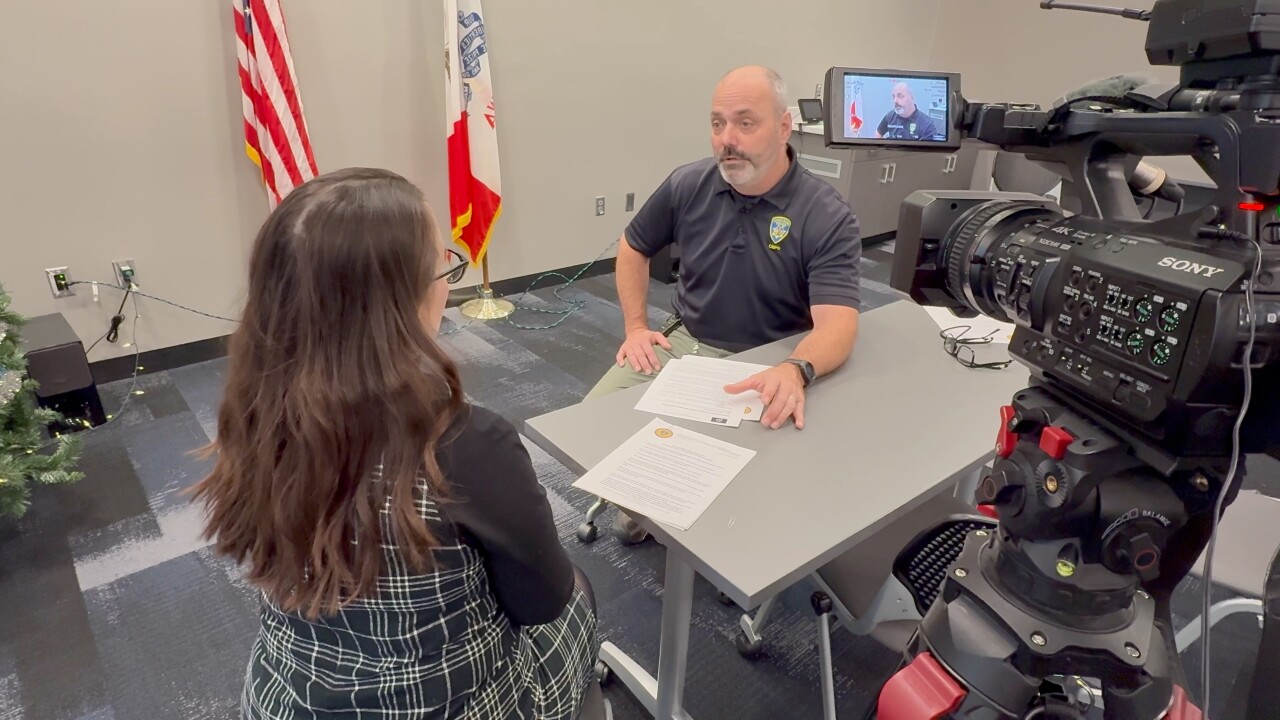
KMTV spoke with Council Bluffs Police Chief Matt Davis about automated license plate readers, a tool increasingly used by law enforcement, but also questioned by civil liberty advocates.
WATCH KATRINA'S STORY BELOW
Professor Megan Graham led a report from the University of Iowa College of Law and the ACLU looking at the growing use of automated license plate readers (ALPRs) across Iowa.
"There is a substantial network of surveillance of this kind across the state," Graham said.
The use of license plate readers has "exploded" in recent years according to Rita Bettis Austen from the ACLU of Iowa. They are different than red light or speed cameras.
"Iowa taxpayers — collectively — have been spending huge amounts of money, likely without any realization that they're doing so in most cases, to be subject to ALPR surveillance," Austen said.
According to Council Bluffs Police Department, there are currently 25 license plate readers in the city.
"They take pictures of every car that drives by them," Graham said.
Council Bluffs Police Chief Matt Davis says the privacy and civil liberty concerns are valid. Data here is wiped after 30 days. But it's a useful tool.
Find the Council Bluffs Police Department policy manual here. Section 427 cover automated license plate readers.
"Our double homicide in the city last year, were it not for the ALPR technology we very likely would not have been able to bring justice to those two families," Davis said.
The Iowa ACLU is also concerned that Iowa doesn't have statewide laws regulating the use of ALPRs, unlike its neighbors.
Davis was with the Illinois State Police when laws were passed there.
"It set guidelines for the use of ALPR cameras in the state of Illinois. It dictated for what purposes we could use, what investigations we could use them for. It provided funding for the cameras. It provided privacy protections," Davis said.
I asked the ACLU what neighbors can do if they're concerned about the use of license plate readers in their communities.
"First step for people is just simply to call their city council member and ask what's the status?" said Pete McRoberts, ACLU policy director.
This story was reported on-air by a journalist and has been converted to this platform with the assistance of AI. Our editorial team verifies all reporting on all platforms for fairness and accuracy.
