



HASTINGS, Iowa (KMTV) — Farmer income in Iowa dropped 53% from 2022 to 2024, according to a new report from Iowa State University and the Farm Bureau, putting financial pressure on agricultural producers across the state.
WATCH KATRINA'S STORY BELOW
"The first pressure that farmers are facing right now are lower grain prices," said fifth-generation farmer Jon Bakehouse. "That's what kind of directly influences your bottom line."
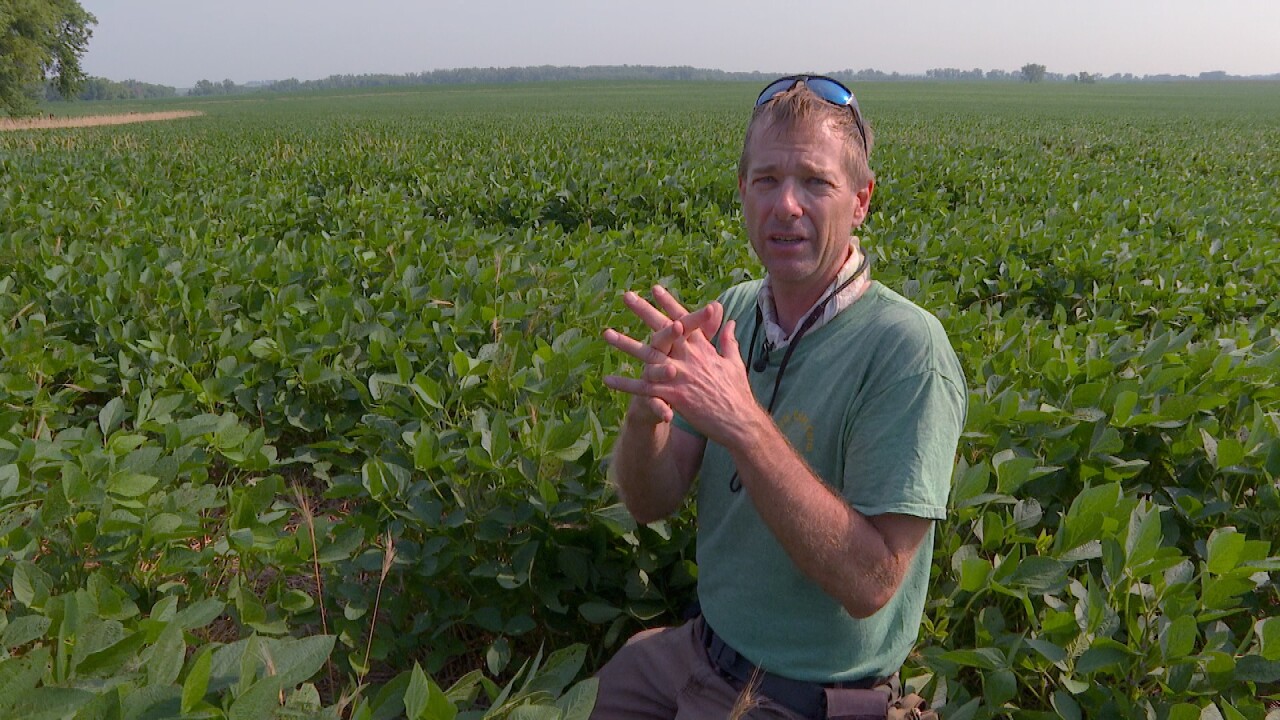
The Hastings farmer uses cover crops to reduce herbicide use and improve soil health. It also saves money.
"So, we have eliminated our first herbicide pass in soybeans," Bakehouse said.
Rising input costs are compounding the problem.
"Like diesel fuel, like fertilizer prices, like seed prices…." said Bakehouse.
Professor John Crespi, the Iowa State University professor who co-edited the report, says global instability is making those input costs worse.
"Not just the trade wars, but the real wars in Ukraine and Iran aren't helping there because a lot of the fertilizers are tied to those areas," Crespi said.
Recent federal farm aid has done little to ease the burden, according to Bakehouse.
"I ran into at least one other farmer who said 'I wish they'd have just kept it," Bakehouse said. "For the amount of money that we received it was a drop in the bucket."
Higher costs and lower revenue means that farmers also spent less money in their communities.
"Of course, we can control what we spend on smaller items like delaying a purchase of a new pickup or a new grain bin," Bakehouse said.
"That has repercussions for all of us," said Crespi. "It affects the restaurants that we eat in, it affects the tax revenues that we get, it affects the schools..."
The economist pointed to some bright spots in the agricultural economy, including strong livestock prices and a biofuels market that seems to be stabilizing.
"Beyond that, you put a smile on your face and tow the line," Bakehouse said.
Crespi also noted that while memories of the 1980s farm crisis linger, the current economic outlook is not nearly as dire.
This story was reported on-air by a journalist and has been converted to this platform with the assistance of AI. Our editorial team verifies all reporting on all platforms for fairness and accuracy.
