

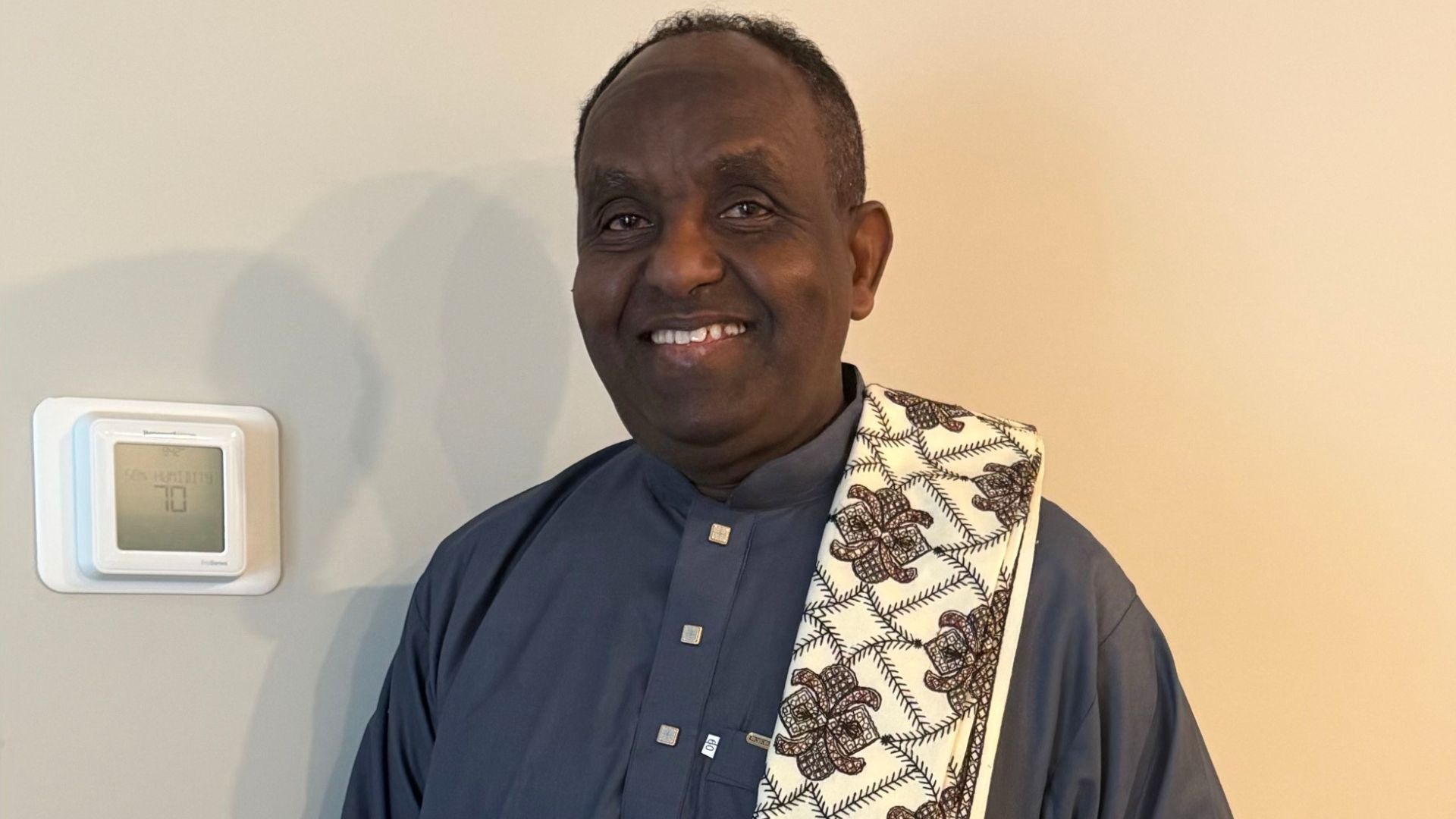


An Uber passenger was charged Tuesday with attempted murder in a weekend attack near Minneapolis on a Somali American driver who was strangled with a seatbelt, run over by his own car and left in a ditch, authorities said.
Mohamed Yusuf, 51, is fighting for his life, has broken ribs, a broken leg, spinal injuries, collapsed lungs and significant internal bleeding from the attack, which occurred after the passenger allegedly told Yusuf he didn’t like the name Mohamed, according to court documents.
Samit Apurva Patel, 25, was charged with attempted second-degree murder and carjacking, but there wasn’t enough evidence to prove the attack was motivated by bias, said Hennepin County Attorney Mary Moriarty. She said that decision “does not diminish the pain that the family and the Somali community is feeling right now.”
An attorney representing Patel at his first court appearance Tuesday declined comment. A person who answered a phone number associated with Patel’s address said, “No comment,” before hanging up.
Dave Risk, a defense attorney in Minneapolis not connected to the case, said that to prove bias, prosecutors would have had to show that Patel intentionally targeted Yusuf because of a protected characteristic like race or religion.
In this situation, the pair likely met randomly, Risk said, adding that would make it tough for prosecutors to show Patel was motivated by bias.
Yusuf’s son Mustafa Osman said his father has been through five surgeries and is not doing well. He said Yusuf has driven taxis and Ubers for years and is known for his empathy and skill at de-escalating tense situations, making the attack especially shocking.
“We don’t have words to describe how bad it’s been. We haven’t really processed everything yet. It’s an emotional roller coaster," he told The Associated Press.
The violence early Saturday in the Minneapolis suburb of Hopkins has increased fear among the Somali community after years of targeted rhetoric, including from President Donald Trump. Minnesota has the largest Somali population in the U.S., with many concentrated in the Minneapolis-St. Paul area. The overwhelming majority are American citizens.
Yusuf's brother says he heard him scream
According to court documents, Yusuf was on the phone with his brother, who is also an Uber driver, when Yusuf picked up the passenger near a Minneapolis bar just before 1 a.m. Saturday. The drop-off location was in the nearby suburb of Hopkins.
Yusuf's brother says he heard the passenger tell Yusuf he didn’t like the name Mohamed, the court documents say. He later heard Yusuf screaming in Somali that he was being choked with a belt and run over by the car, according to the filings.
Moriarty said the motive remains unknown but said, “There were some serious issues going on with this gentleman at the time he went home that so alarmed his parents that they called 911.”
She said she did not believe there was a recording of the call between Yusuf and his brother, and there was a camera in Yusuf’s car but it was not on.
Call for a wellness check led authorities to Patel
Patel's parents called for a wellness check after Patel arrived home appearing intoxicated and “exhibiting signs of emotional distress and belligerent behavior,” according to the court filings. When officers arrived, they found Yusuf's car in the driveway with the exterior and driver's seatbelt damaged, according to the filings. Dirt, burs and a shoe were found in the driver's side interior, and the phone call with Yusuf's brother was still active through the car's system, court records show.
Officers said Patel told them he had been drinking and “admitted he took an Uber home, but he claimed not to know where his Uber driver was," the filing says.
Officers found Yusuf in a patch of burs in a ditch off the side of the road using location data from his smartwatch and a drone with thermal imaging.
Yusuf is known for his empathy and ability to de-escalate
Osman, 27, said he was shocked when he got a frantic call from his uncle saying something had happened to his dad.
Osman, the oldest of Yusuf’s five children, described his father as empathetic and good at de-escalation. He said his father has dealt with aggravated or aggressive passengers during his many years driving.
“Anytime he’s in trouble, he’s the one that will calm things down, whether it’s between the family or if it’s while he’s at work," he said.
Yusuf came to the U.S. in 1993 and spent some time working as a taxi driver in Chicago, said Osman. The family lived in Minnesota, which was where Osman was raised, and had moved back in 2018.
Dozens of community members visit hospital
Uber said in a statement that it was horrified by the attack, has been in touch with the driver’s family and has banned the rider from the platform.
Jaylani Hussein, executive director of the Minnesota chapter of the Council on American-Islamic Relations, said dozens of community members have been stopping by the hospital to show support for Yusuf.
“We feel as a community we’re under threat, constantly,” Hussein said. “Our community has, unfortunately, been feeling the brunt end of a disinformation and demonization campaign that has been going on now, and it’s coming from every corner.”
The Trump administration's largest immigration enforcement effort, Operation Metro Surge, targeted the Twin Cities. Leading up to that operation, Trump said immigrants from the war-torn East African country have “caused a lot of trouble,” and he wants them to leave. He also referred to Somali immigrants in the U.S. as “garbage.”
Muhiyadin Yusuf, who knows Mohamed Yusuf but is not related to him, has been driving for ride-hailing apps in the Twin Cities for more than a decade. He said he's felt unsafe in general because of comments from Trump and other politicians targeting Somalis. But since Saturday, he's reduced his nighttime driving hours and added a third camera to his car. Some friends of his have stopped driving altogether.
“As a Muslim, as an immigrant, as a driver and as a Somali community, it affects me,” he said. “I'm scared now, more than before.”
