

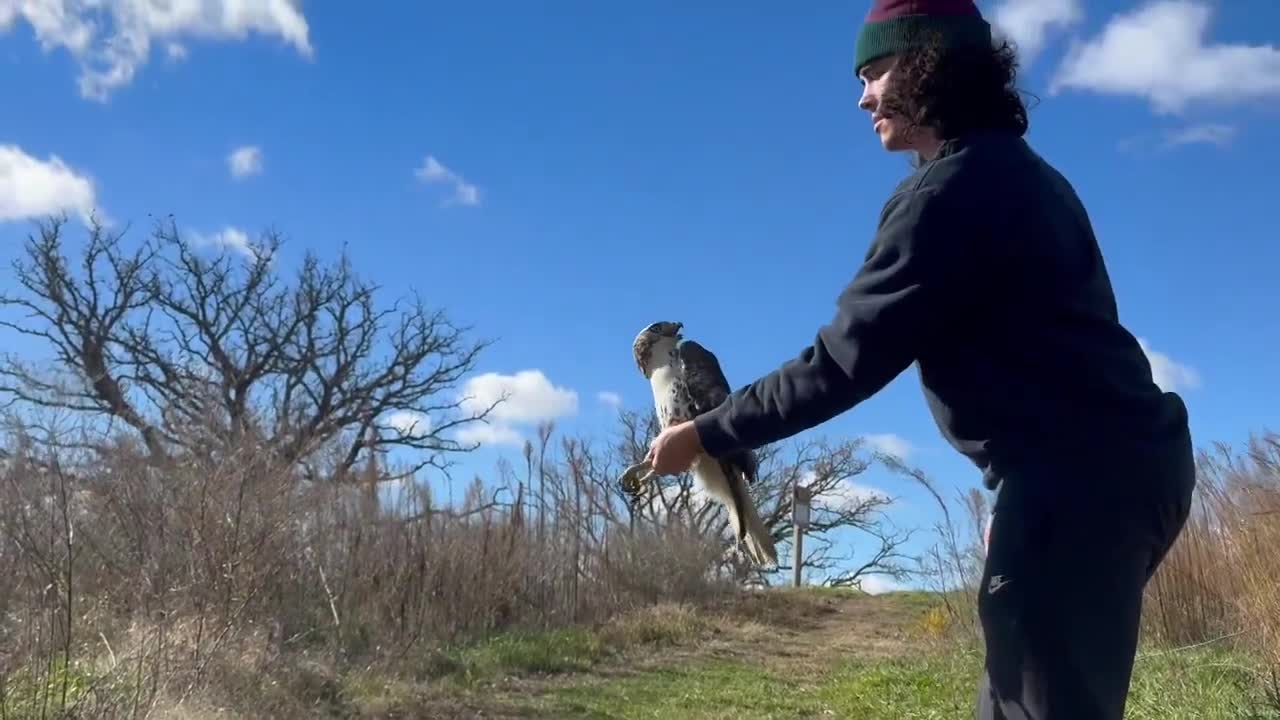


CRESCENT, Iowa (KMTV) — Hitchcock Nature Center in Crescent is participating in a citizen science program called HawkWatch, which tracks raptor and other bird migrations, providing data on environmental health.
Retired history professor Mark Orsag is the paid bird counter, who works with several volunteer.
Orsag was asked how common it was to see a bald eagle when he was growing up in Pennsylvania.
"Very rare. Very rare. I remember seeing one as a kid at Hawk Mountain and it was a huge deal," Orsag said.
The national bird made a gradual comeback after the pesticide DDT was banned in 1972 and is now a common sight near he Missouri River in Iowa.
He says he sees fewer American Kestrels — a small type of falcon — than he used to spot and thinks the population is in decline.
There are also half as many Red-tailed Hawks migrating south compared to 20 years ago, Orsag says, but probably not because they're declining.
"It's too nice. They're not getting driven out of North Dakota and South Dakota anymore. They're staying up there over the winter," he said.
Across the park, a Red-tailed Hawk was captured by Kellie Hayden's team. They placed a band on his leg.
"So, we are learning that some of these birds have very, very long lives," she said.
Hayden, who is the lead bander, said she'd love to test the birds they capture for lead, but it's prohibitively expensive.
"Some studies are looking at microplastics in large raptors because it probably has a cumulative effect much like DDT," Hayden said.
After Hayden removed burrs from his feathers, the hawk was released.
The HawkWatch team has tracked record numbers of migrating birds this year. That information will be added to an international database, telling us more about our world.
 Facebook
 YouTube
 Instagram
 X
This story was initially reported by a journalist and has been converted to this platform with the assistance of AI. Our editorial team verifies all reporting on all platforms for fairness and accuracy.
