

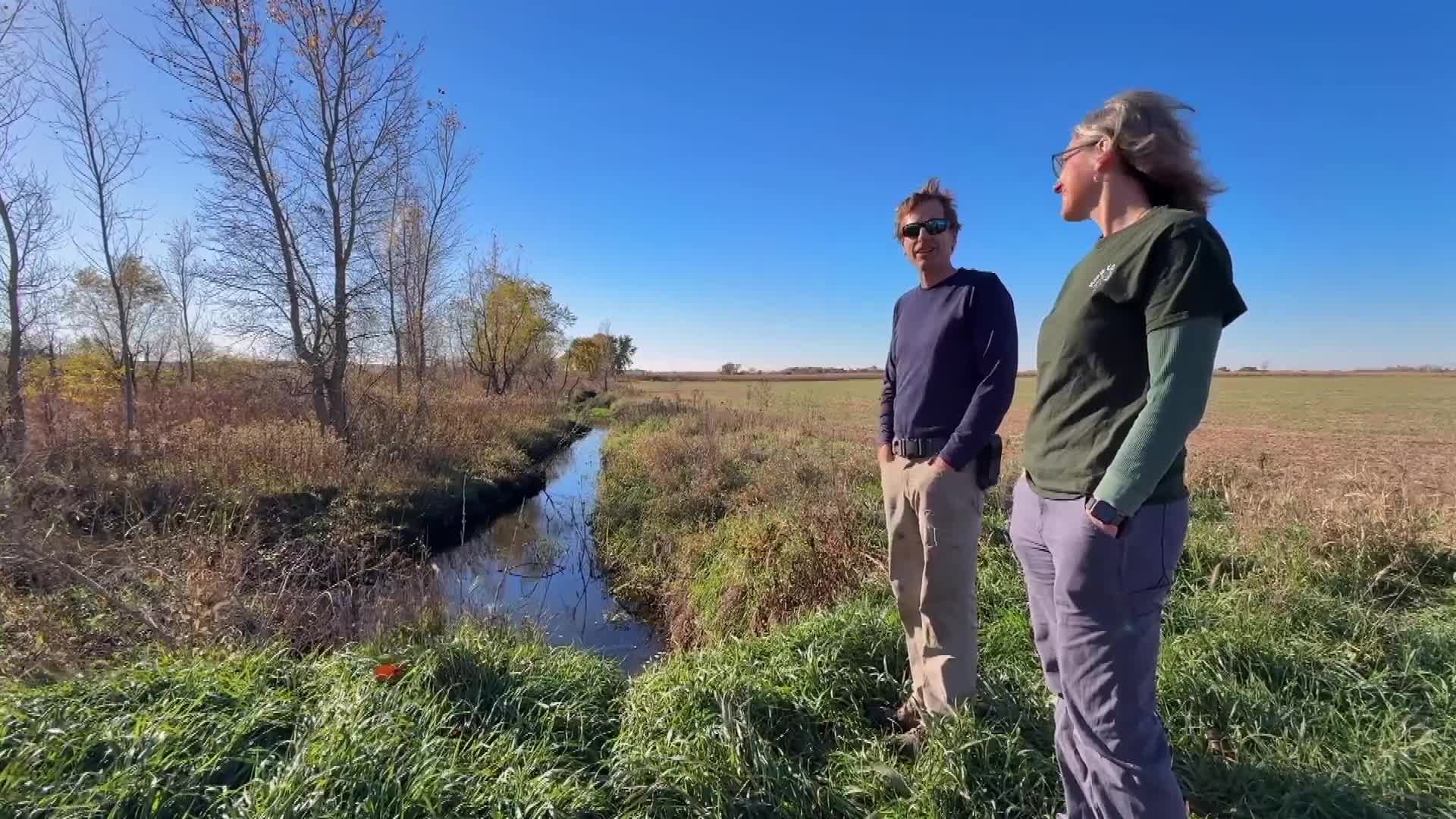


HASTINGS, Iowa (KMTV) — The corn is harvested at Maple Edge Farm in Hastings, but a cover crop is now growing in the field — and it could be a potential solution to Iowa's water quality problems.
Farmer Jon Bakehouse says more producers may be willing to plant cover crops if the financial incentives improve.
For the last decade, he has planted cereal rye. The cover crop grows through the winter and into the next year's soybean season.
"Over the last three (years) we've really refined our system to, I think, get us in a better place to realize all the benefits of a cover crop," Bakehouse said.
The Iowa Soybean Association says cover crops help keep nitrogen out of streams and rivers by holding nutrients in the soil.
"Soil that has no other roots in it will leak nutrients...there's nothing to hold onto those nutrients so they will move into the water supply," said Bakehouse.
An Iowa State study found about 23% of the state's farmers use cover crops and the Farm Bureau reports that amounts to roughly 17% of Iowa cropland. Bakehouse believes labor requirements and financial risks keep some producers from trying them.
"It's a lot of work," he said.
His sister, Jeanne-Marie Bakehouse, comes home from Colorado to run the tractor and grain drill behind the combine.
"For me, it is straight up the visceral, emotional reaction that I get when I see something growing through the winter and knowing that its doing well for the soil," she said.
Bakehouse also says federal crop insurance rules don't always align with how he manages his cover crops.
"The risk management agency wants that cover crop terminated within three days of planting soy beans. Rightly so, it can be a risk to grow two crops at once and they’re insuring beans. But because we want the extra benefit of our cover crop we terminate much later, three weeks later, so we are not eligible for the federal crop insurance so we don’t carry crop insurance on our soy beans,” he explained.
The payoff may not always show up immediately on a balance sheet, he says.
"It is obvious where it's showing up in environmental health," Bakehouse said.
As Iowa continues looking for ways to improve water quality, Bakehouse hopes more farmers will have the opportunity to try cover crops for themselves.
 Facebook
 YouTube
 Instagram
 X
This story was initially reported by a journalist and has been converted to this platform with the assistance of AI. Our editorial team verifies all reporting on all platforms for fairness and accuracy.
