

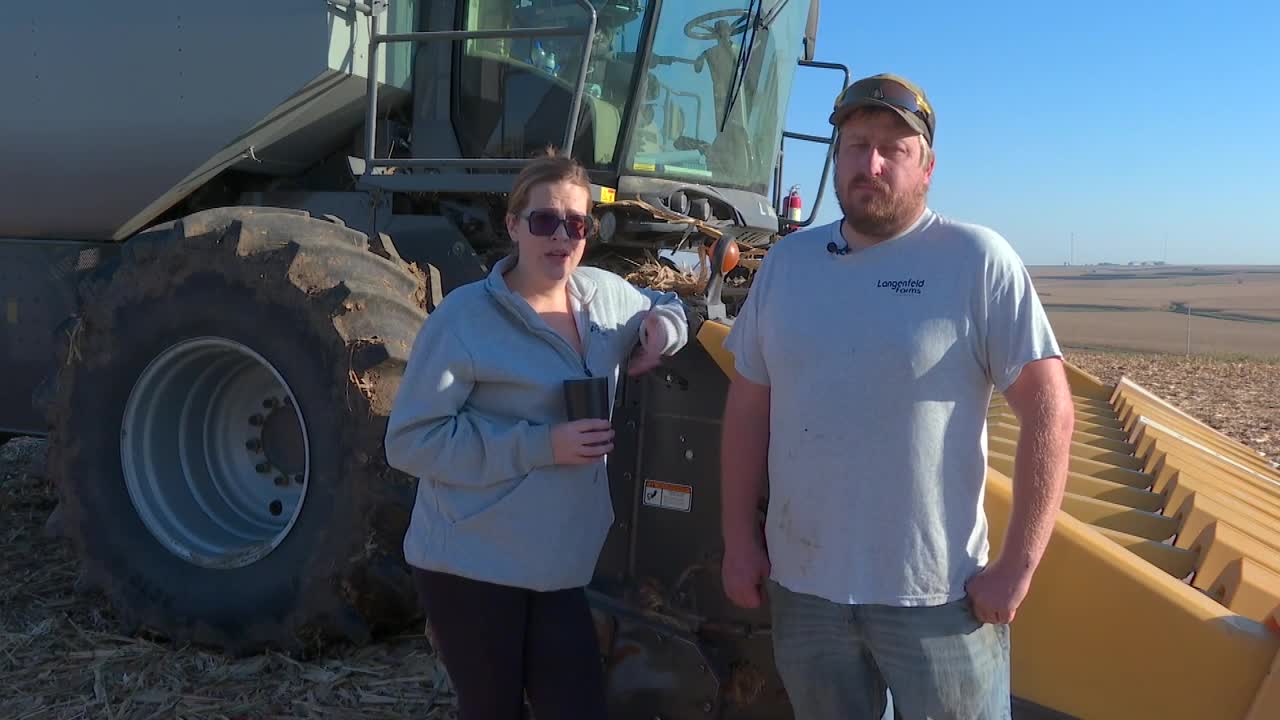


HARLAN, Iowa (KMTV) — Diesel prices, equipment costs — not to mention a rainy September — have made this harvest season challenging for many southwest Iowa farmers.
The Langenfeld's farmstead was destroyed during the Arbor Day tornadoes in 2024. They've since rebuilt, but as a young farm family, some of the economic challenges hit a little harder.
Dianne Langenfeld says they love their new home, but rebuilding was stressful.
"I would not ever want to build a house again," she said, standing in her new kitchen.
Then came this year's harvest. Heavy rains delayed work, and Trevor Langenfeld says a late start means dryer crops and lower yields.
"Well there's a lot this year — there's been high fuel, muddy fields, a lot waitin' for stuff to dry," Trevor said.
Higher yields make a difference when expenses are high.
"'Cause prices, they're decent right now — they could be better — but the more yield, the more income you'll have," he said.
Diesel fuel costs about twice what it did last year and fertilizer prices have been high for several years. Trevor says he offset some the fuel cost by locking in a price last spring before things got worse.
"Inputs are high, fuel's high, and it seems like parts are — just keep gettin' higher for equipment," Trevor said, noting a lot of his fellow farmers have needed to repair equipment this season.
At 36, the Langenfelds are 20 years younger than the average Iowa farmer. Trevor rents a lot of his land from his dad.
"Everyone we know that farms, that's younger than us or our age, farms with their dad or with their grandpa, or had it handed down to them," said Dianne. "There's not a lot of people who can start out by themselves."
They have other jobs to make sure the farm is there for the next generation. Trevor has a manure spreading business — a product used for fertilizer — and Dianne has worked office jobs in nearby towns.
"Hopefully, mother nature is good to us for the rest of the fall and we can make it through," Trevor said.
The good news: by Thursday morning, there were just 70 acres left to harvest on the Langenfeld farm.
 Facebook
 YouTube
 Instagram
 X
This story was initially reported by a journalist and has been converted to this platform with the assistance of AI. Our editorial team verifies all reporting on all platforms for fairness and accuracy.
