

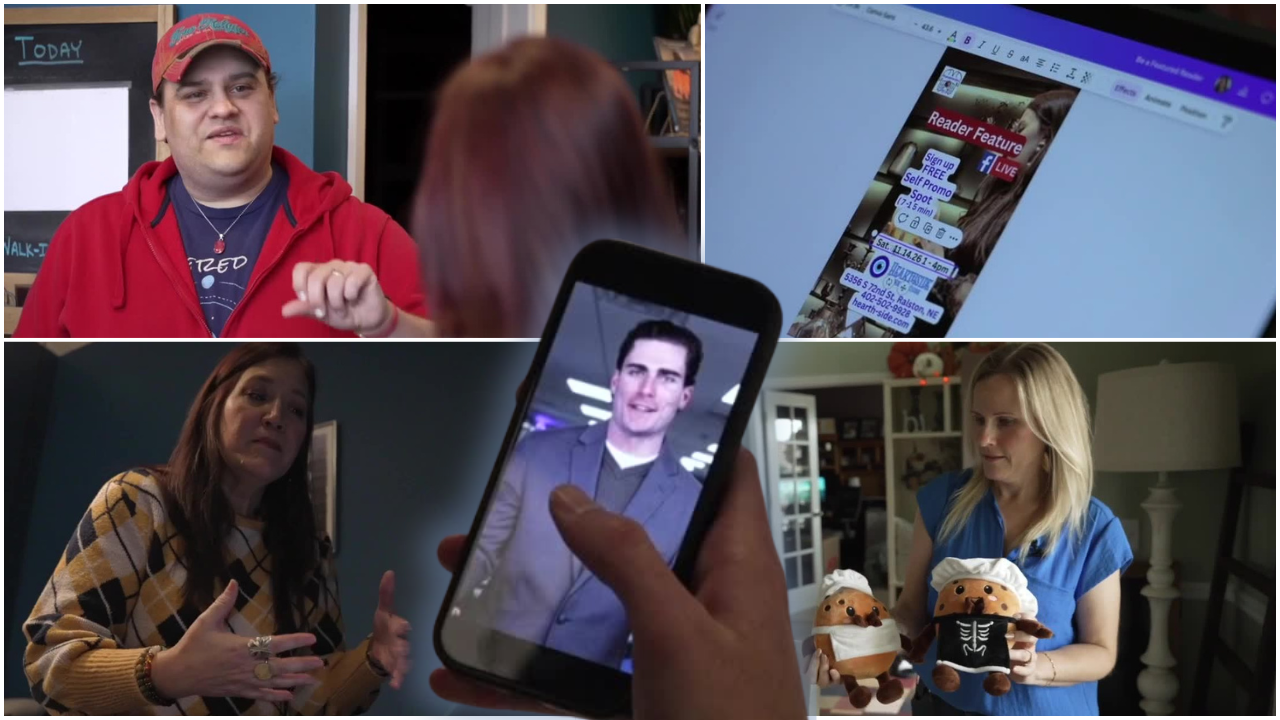



BELLEVUE, Neb. — Artificial intelligence is making it easier for small businesses to create their own advertisements, logos and marketing materials. But some Omaha-area creatives say that convenience is coming at their expense.
Graphic designer Lenda Brewer says she has worked as an artist on film sets, television productions, business advertisements and other projects. As AI-generated material becomes more common, she says creatives are seeing fewer opportunities.
“We’ve lost some of the creativeness, we’ve lost some of the ownership of a project,” Brewer said.
Brewer met with KMTV at one of her clients, Hearthside Candles and Curios in Ralston. She said AI-generated advertisements can create problems when they overlook copyrighted material or distort what a product or person actually looks like.
But her larger concern is what AI means for the people who once did that work.
“We’ve got second jobs, managing working part time at a restaurant, waiting tables, bartending while we’re looking for work,” Brewer said.
For small-business owner Amber Younger, however, generative AI offers a way to create materials while operating on a tight budget.
Younger runs a cookie business out of her Bellevue home. She said she has used ChatGPT's generative AI for labels and menus, as well as to help create her business mascot, Mr. Chip – the name courtesy of her son.
“I definitely see it becoming more popular, more useful, more advanced,” Younger said.
Younger has worked with graphic designers in the past, including for business cards, and says they are still important. But her business is only a year old, and she says she is still spending more on it than she takes home.
That makes inexpensive AI tools appealing while she builds the business.
Back in Ralston, Hearthside Candles and Curios owner Alex Fernandez remains firmly on the other side of the debate.
“When you hold it up side by side to the AI slop that is all over the place, you can tell the difference,” Fernandez said.
The competing perspectives illustrate a growing challenge as generative AI becomes more capable: small businesses can produce creative material without the expense of hiring someone for every project, while artists who traditionally performed that work may face fewer paid opportunities.
Younger sees AI as a useful tool for entrepreneurs working with limited resources. Brewer, meanwhile, wants regulations that protect human artists as the technology continues to develop.
For both sides, the debate is no longer hypothetical. It is already playing out among businesses and creatives in Sarpy County – and it's definitely showing up on your social feed.
 Facebook
  YouTube
 Instagram
 X
XThis story was initially reported by a journalist and has been converted to this platform with the assistance of AI. Our editorial team verifies all reporting on all platforms for fairness and accuracy.
