

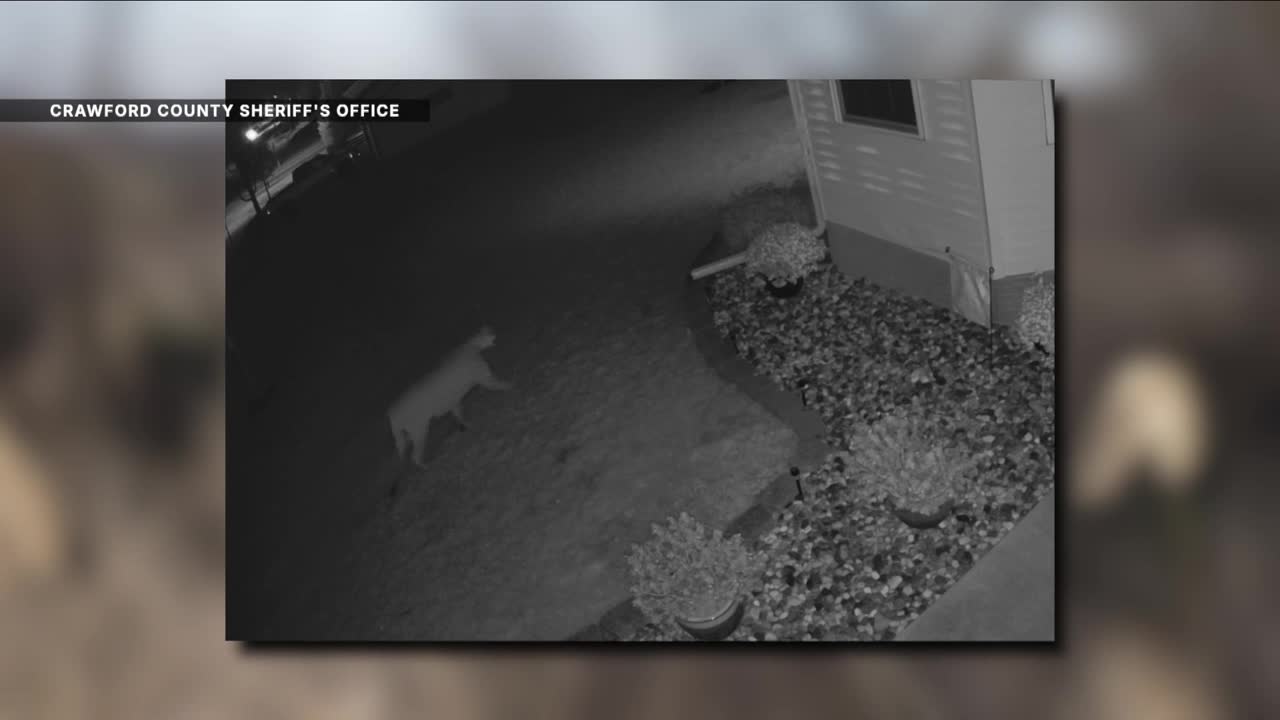


CLARINDA, Iowa — Video of a mountain lion surfaced in Crawford County, Iowa, over the weekend, prompting the local sheriff's office to issue a notice to residents. But wildlife experts say there's no reason to panic — instead, it's a rare chance to admire a remarkable animal in the wild.
The cat was spotted near rural Manilla, Iowa. According to Adam Janke, a state wildlife extension specialist at Iowa State University, the animal is likely a wanderer searching for a place to call home.
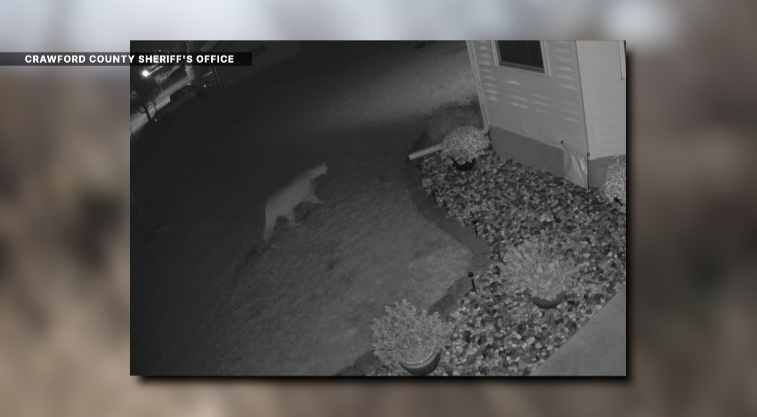
"They are moving from places like Nebraska, Oklahoma, South Dakota where they breed and looking for a new place to set up a territory," Janke said.
Mountain lions are known to go on long journeys, and males in particular often get pushed out of their home range and travel vast distances — frequently ending up alone in Iowa.
"We don't have evidence of reproduction of mountain lions in Iowa. We also know it's pretty routine for them to move from western breeding ranges into Iowa," Janke said.

The species was eradicated in Iowa in 1867, during an era of unregulated hunting and widespread habitat loss. Today, the nearest established populations live in places like northern Nebraska, Oklahoma and the Black Hills of South Dakota, where wild, intact habitat and legal protections allow them to survive.
But in the Hawkeye State, there's no such forever home. Mountain lions aren't afforded any legal protections in Iowa, which makes it unlikely the species could become established here.
So why does it seem like these elusive cats are showing up more often? Janke points to technology.

"There's a trail camera or ring doorbell on most houses or forests these days... it's kind of a cool chance to see a mountain lion in the wild right here in Iowa," Janke said.
Because so many homes and wild areas are now monitored by cameras, this normally cryptic animal is simply being noticed — and reported — more frequently.
What the Iowa DNR says
The Iowa Department of Natural Resources did not make anyone available for an interview but answered a list of questions by email.
According to the DNR, mountain lions are highly mobile and generally stay on the move, rather than setting up a home range in town. The agency said this particular cat is probably a young male — likely from South Dakota, Wyoming or Nebraska — in search of a female and looking to establish his own territory. There's also a good chance it's the same cat previously sighted in Monona County, confirmed by the DNR.
The DNR noted that experts use distinctive characteristics to help identify individual cats, such as body size, head-to-body ratio, markings on the tail or ears, or a predictable travel pattern. But, the agency acknowledged, it's not an exact science.
As for what area residents should know: chances are the cat will only be seen on camera at night and not encountered in person during the day.
What to do if you see one
While mountain lions generally avoid humans, the DNR offered a few suggestions for the remote chance that someone comes face to face with one:
- Spread your jacket, coat or shirt above your head and attempt to look larger.
- Hold your ground, wave, shout and don't run — running stimulates the predator reflex (just like dogs) to pursue anything that runs away.
- Maintain eye contact if you sight a lion. Lions prefer to attack from ambush and count on the element of surprise.
- If small children are present, or if there are several people in your group, gather everyone very close together. Mountain lions are not predators of large groups.
Janke added that people with unsupervised pets should use caution. If you do encounter a mountain lion, make yourself look big to scare it away, then report it to authorities.
—
 Facebook
 YouTube
 Instagram
 X
This story was initially reported by a journalist and has been converted to this platform with the assistance of AI. Our editorial team verifies all reporting on all platforms for fairness and accuracy.
