

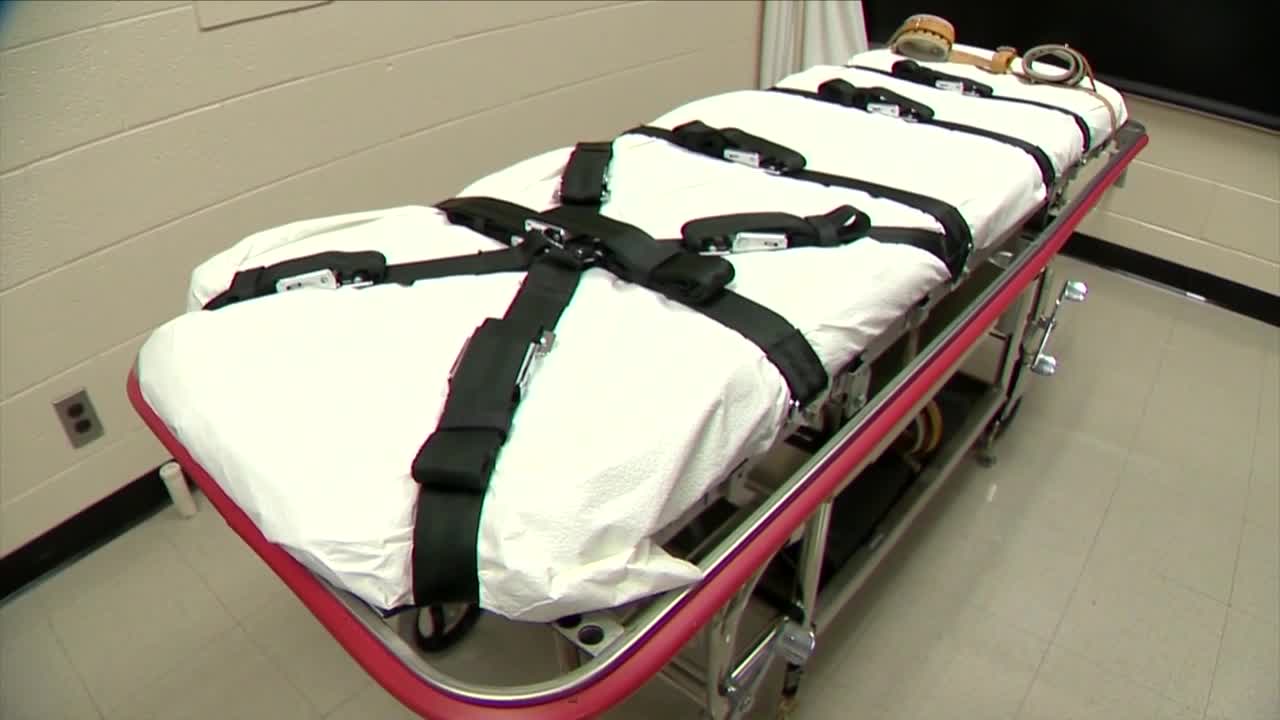


OMAHA, Neb. — The debate over capital punishment is resurfacing across the country following a failed execution attempt in Tennessee, prompting renewed discussion about how executions are carried out in Nebraska and whether the state's methods could change in the future.
Nebraska's most recent execution took place in 2018, when Carey Dean Moore became the first person executed in the state in more than two decades. The execution also marked a national first, as Nebraska became the first state to use fentanyl as part of a four-drug lethal injection protocol.
The state's use of fentanyl came after difficulties obtaining more traditional execution drugs. Pharmaceutical suppliers, particularly those overseas, increasingly refused to provide drugs if they were intended for use in executions, forcing some states to seek alternative methods.
In Tennessee, officials recently attempted to carry out the execution of death row inmate Christa Pike using phenobarbital, a drug more commonly associated with modern lethal injection procedures.
The failed attempt has sparked criticism from death penalty opponents and renewed questions about the reliability of execution methods.
Spike Eickholt, an attorney with ACLU Nebraska, said the issue extends beyond the specific drugs used in executions.
"Unfortunately what happened in Tennessee is not unusual," Eickholt said. "The death penalty carries a high risk of error and botched executions like this are not the exception as much as they are standard and are to be expected. Which is one reason among many why we urge policymakers to simply abandon the death penalty. Because it's broken and it doesn't work."
Nebraska's death penalty has been the subject of political debate for years. In 2015, state lawmakers voted to repeal capital punishment, overriding then-Gov. Pete Ricketts' veto. However, Ricketts later led a successful campaign to place the issue before voters in a 2016 referendum.
Nebraska voters ultimately chose to keep the death penalty, overwhelmingly rejecting the repeal and reinstating capital punishment in the state.
In a statement Wednesday, Sen. Pete Ricketts' office defended the practice.
"Senator Ricketts believes capital punishment is an important tool to protect law enforcement and our communities," the statement said. "Laws regarding capital punishment should continue to be determined on a state-by-state basis."
Nebraska lawmakers have also explored alternative execution methods. In 2024, a bill was introduced that would have authorized executions by nitrogen gas asphyxiation. Nitrogen gas is currently an approved execution method in five states.
The proposal failed to advance and has not been reintroduced.
According to state records, 12 inmates are currently housed on Nebraska's death row. At this time, none are scheduled for execution.
As national attention once again turns to the administration of the death penalty, Nebraska's approach remains unchanged, with lethal injection continuing as the state's approved execution method.
 Facebook
  YouTube
 Instagram
 X
XThis story was initially reported by a journalist and has been converted to this platform with the assistance of AI. Our editorial team verifies all reporting on all platforms for fairness and accuracy.
