

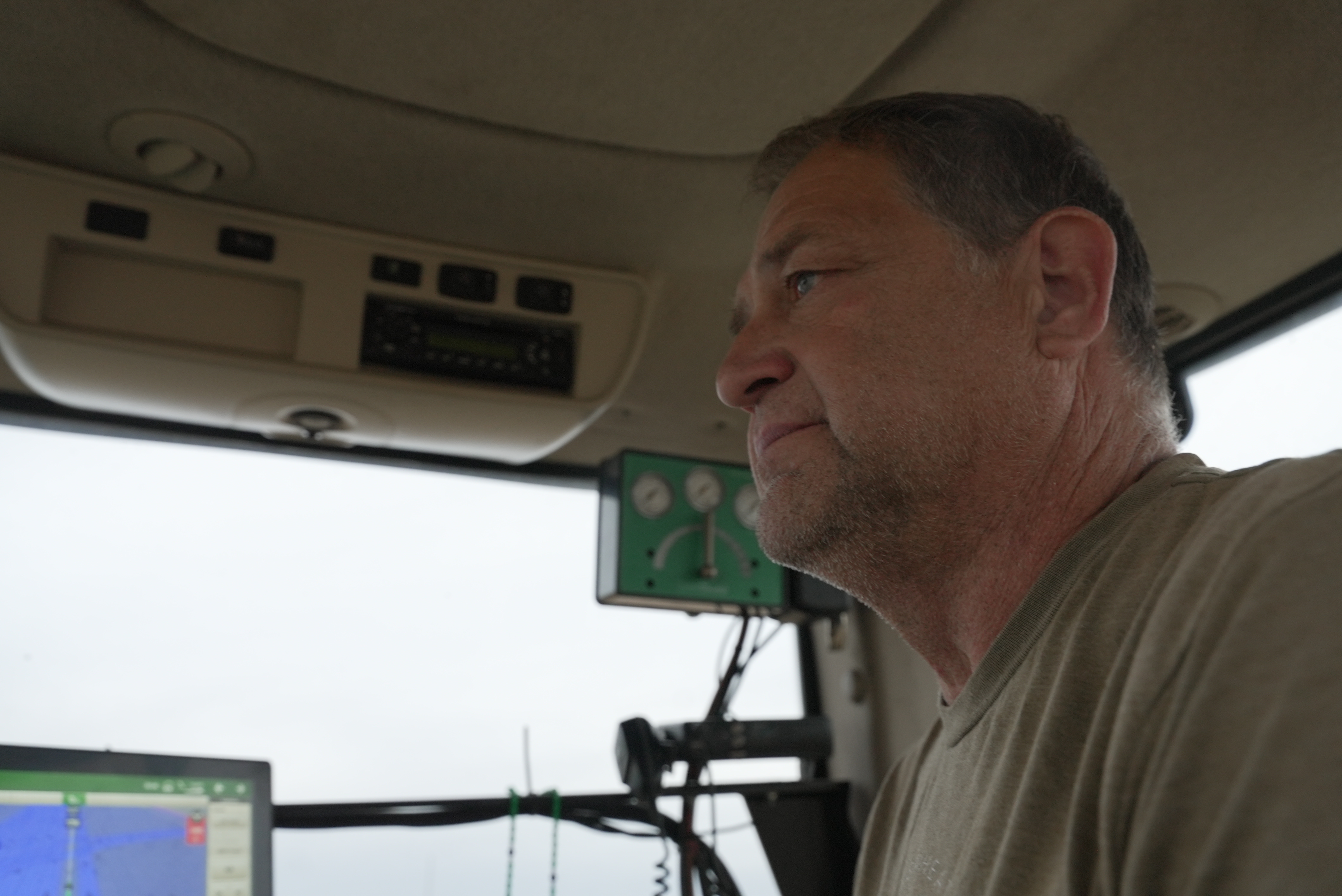


SAUNDERS COUNTY, Neb. — For fifth-generation farmer Doug Bartek, filling up the equipment needed to keep his northern Saunders County operation running has become significantly more expensive.
Bartek said his operation can burn through more than 2,000 gallons of diesel in a week. At current prices, he said that can mean spending more than $10,000 on fuel in a single week.
“We'll burn through, you know, over 2,000 gallons in a week,” Bartek said. “At over $5 a gallon, that's, you know, that's past $10,000 per week of fuel that we burn.”
Bartek said it wasn't too long ago that he was paying less than half as much.
“About a year ago we were paying a little over $2, maybe $2.25 for diesel,” he said. “We just filled our truck up the other day. We've got a fuel truck, and we paid $5.35 per gallon for it.”
Fuel isn't the only expense squeezing the operation. Bartek said he's also paying more for necessities such as fertilizer.
While he's getting more money for the corn he sells, Bartek said the increase hasn't been enough to offset the higher costs of running the farm.
“We just keep digging a little deeper into what we call a line of credit,” Bartek said. “But right now it seems like we're spending more than what we're taking in.”
Bartek was in Lincoln when Gov. Jim Pillen signed an executive order providing temporary diesel fuel tax relief for vehicles transporting agricultural products or livestock.
“At the end of the day, I think it was a good thing,” Bartek said.
But for Bartek, the pressures facing agriculture are about more than this year's expenses.
He's a fifth-generation farmer, and his 24-year-old son is now following him into the family business as its sixth generation.
Bartek said that makes the uncertainty surrounding agriculture especially personal.
“I question, did I do the right thing helping my son get into it?” Bartek said. “I love having him with me every day. I just sometimes think, did I do him an injustice?”
Bartek said his son enjoys farming and is good at the work, but he worries about what will happen if conditions don't improve.
“I just hope things in ag will turn around because if not, I probably didn't do him any favors,” he said.
 Facebook
  YouTube
 Instagram
 X
XThis story was initially reported by a journalist and has been converted to this platform with the assistance of AI. Our editorial team verifies all reporting on all platforms for fairness and accuracy.
